For Women’s History Month, four leaders on risk, authenticity, and getting out of your own way
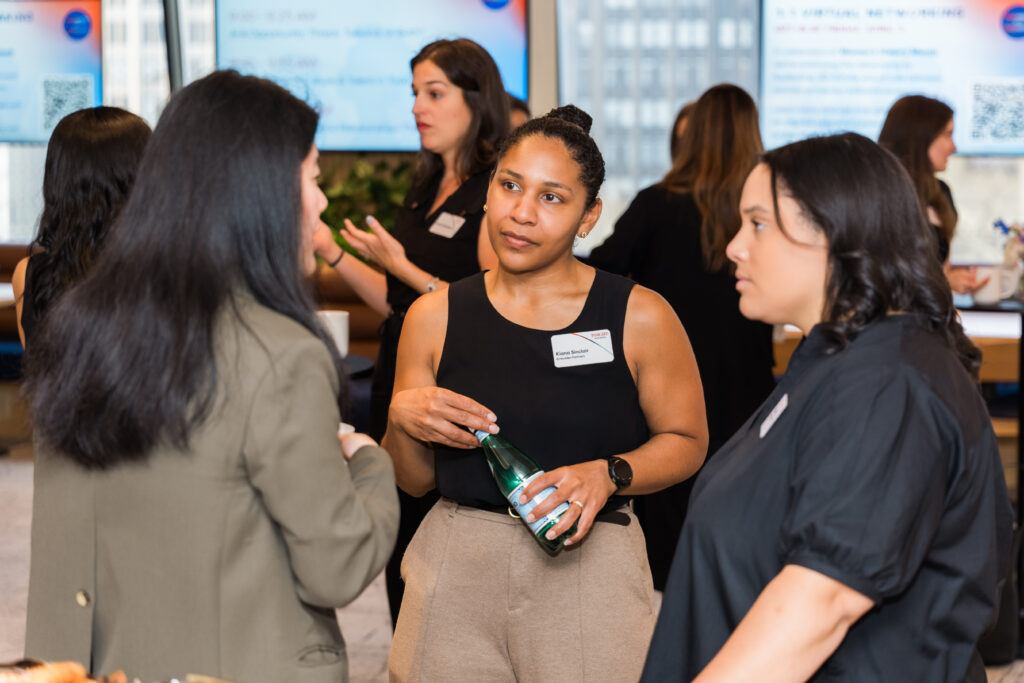
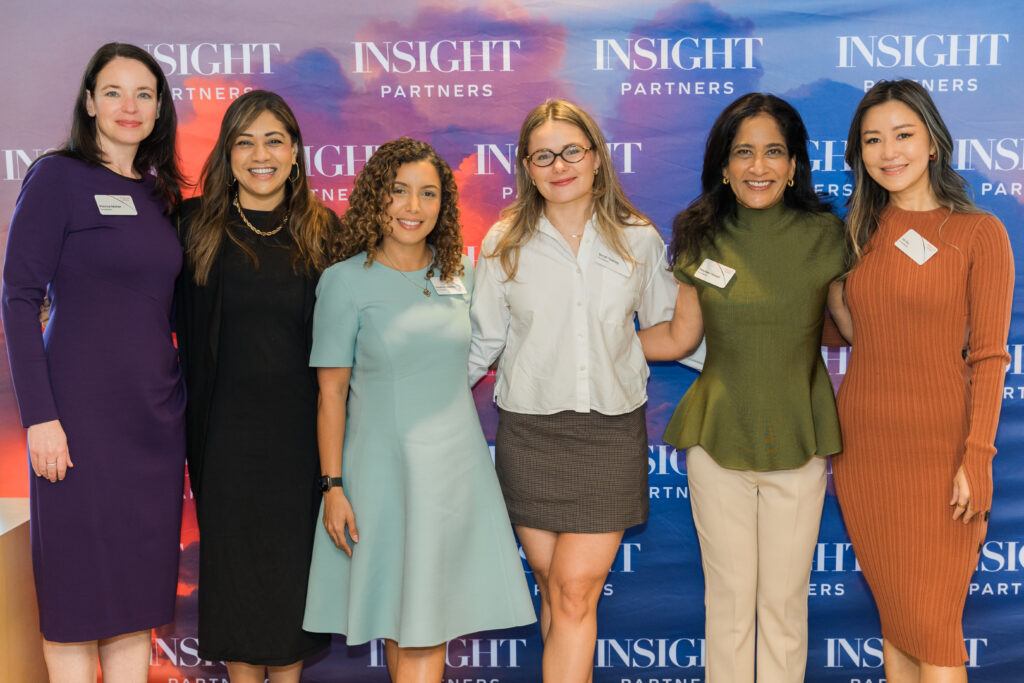
In honor of Women’s History Month, Insight Partners brought together senior leaders to talk about topics that don’t always make it into formal leadership discussions: leading through uncertainty, building the relationships that actually move your career forward, and knowing when to take the leap.
Key speakers
- Meg Fitzgerald, Insight Partners (Moderator)
- Naureen Hassan, CEO, DriveWealth
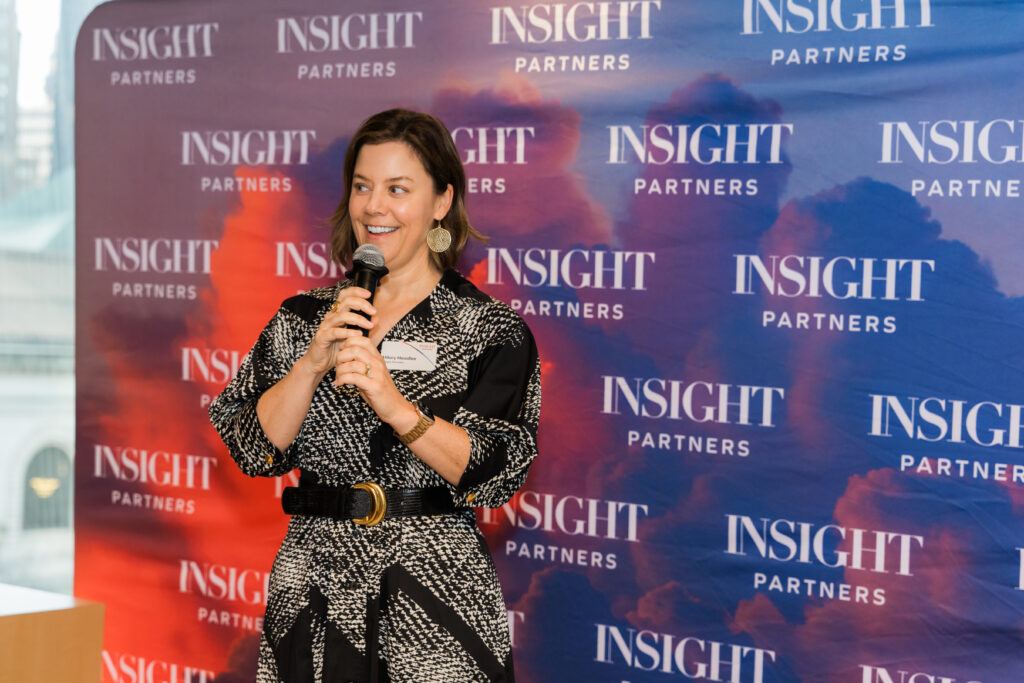
- Hilary Gosher, Managing Director, Insight Partners
- Cindy Stoddard, CIO, Intel
Key takeaways
- People don’t look to their leaders for perfection in difficult times. They look for authenticity, transparency, and humanity.
- Balancing an immediate revenue opportunity against a long-term plan is one of the most persistent challenges in a high-growth company — and it can only be navigated as a team.
- The skills that make you indispensable early in your career are not the same ones that make you effective as a senior leader. Moving from having answers to asking better questions is something that has to be deliberately unlearned.
- No one who is successful has gotten there without a sponsor — someone willing to take a risk on them, create an opportunity, and advocate in rooms where decisions are made.
- Meaningful risk is not recklessness. The leaders who take the biggest swings do so grounded in data, self-knowledge, and a clear sense of their own ambition.
Leading when the path isn’t clear
Stoddard has led organizations through shrinking periods, rapid growth, mergers, and cultural shifts across industries from logistics to semiconductors. Her observation across all of it: People don’t need their leaders to have all the answers.
“The people in the organization aren’t looking really for perfection from their leaders — they’re actually looking for humans. Humans that can inspire some confidence, authenticity, and transparency.”
Her approach centers on sharing as much as possible, even when information is incomplete, and — critically — living up to what you say. When her team feared that automation would eliminate their roles, she committed to retraining rather than reduction and kept that commitment. Without follow-through, transparency becomes just words, and credibility is the first thing to go. She also maintains an open-door policy as a matter of principle: when leaders go quiet during hard stretches, the silence fills with rumor.
Hassan, six months into her role as CEO of DriveWealth*, brought her own version of this challenge — the tension between chasing an immediate opportunity and protecting the long-term plan.
“It’s gotta be a team sport. What are the trade-offs we’re making? What do you say yes to? What do you say no to?”
Her team recently walked away from a major deal that would have derailed a roadmap serving far more clients. It meant bringing the board into the discussion and being transparent about the reasoning. Getting that alignment, she argued, is what keeps the whole organization rowing in the same direction — even when the direction means leaving money on the table.
What you have to unlearn — and who you need in your corner
Gosher identified two things she had to actively work against as she moved into more senior roles. The first was the instinct to be the smartest person in the room.
“I needed to move from kind of knowing all the answers to asking the better questions, or asking the right questions. That’s a behavior I needed to unlearn.”
The second was control. Senior leadership means accountability without execution, and learning to genuinely trust your team is harder than it sounds. She has watched founders learn this in real time: from writing every line of code to trusting a CTO, from closing every deal to trusting a sales team to do it. Letting go, she observed, is a core part of becoming a better leader.
On the relationships that actually accelerate a career, Hassan drew a distinction she returns to whenever she mentors someone: the difference between a mentor and a sponsor.
“I don’t think anybody who’s successful has gotten to where they are without a sponsor. What a sponsor is — is somebody who’s willing to take a risk on you. Who’s willing to create an opportunity for you because they know what you can deliver.”
Hassan has had three or four sponsors throughout her career, and the best of them carried her name across organizations, some of whom provided references for her current role. She also mentioned someone she worked with in 2003 who still advocates for her in the industry today. Maintain those relationships, she said. They are long-term.
Authenticity, voice, and betting on yourself
Hassan’s advice to people she mentors is simple: find your voice. Earlier in her career, she would sit in senior meetings and say nothing, not sure she had anything worth adding. Her fix: if materials were sent in advance, she would read them, pick one thing she wanted to say, and say it early. Getting into the conversation at the start made it easier to stay in it.
On risk, Hassan was direct about her decision to leave UBS before she had another job lined up. She had made it to the executive committee of a major financial institution. She wasn’t enjoying herself. A cancer diagnosis clarified the question she needed to answer.
“It really takes understanding what makes you tick. What do you enjoy doing? What are you good at? What are you not good at? — to make that leap, and being willing to say, I’m throwing this away, and betting on myself.”
Gosher reframed risk from the investor’s seat. Passing on a deal, she argued, is often not cautious but a failure of imagination.
“Not taking risk really is about not advocating for yourself, and not dreaming big enough.”
The founders she has watched scale their companies over the past two decades don’t take reckless risks. They ground their bets in data, customer feedback, and honest self-assessment — and then they go all in.
Time, balance, and the long arc
Gosher protects her mornings for hard thinking and hard conversations, and pushes coffee chats and mentoring calls to the afternoon when energy has naturally shifted. She’s also leaning on AI to claw back the hours that used to disappear into email and meeting prep. Hassan put it plainly:
“It frees up my time to build relationships with team members, to sponsor, to have those conversations, to go see clients. It’s an exciting time.”
On balance, Stoddard was practical: Personal priorities need to go on the calendar as real commitments, not intentions. Her daughters’ recitals and swim meets were scheduled as meetings, because some things cannot be recovered. The balance shifts over a career — the trade-offs made when children are young look different later — but they should always be made deliberately, not by default.
Hassan offered the frame that holds it together: Any given day won’t be in balance. The long-term arc is what matters. She once left a board meeting in Switzerland early to catch the last flight to her son’s school concert. She told the board exactly why. She made it — barely — and it was worth it.

What’s keeping them optimistic
All three closed on a note of genuine enthusiasm. Gosher sees AI as a fundamental reset — one that opens space for the skills that have always mattered most: leadership, judgment, and the ability to ask the right questions. Stoddard sees the potential to make work feel more human, less weighed down by the repetitive and mechanical. Hassan put it simply: The drudge work is going away, and what’s left is the part worth doing.
Editor’s Note: Insight Partners connects women across its network through peer matching and mentorship programming. To learn more about Insight’s portfolio resources and operating expertise, visit insightpartners.com. Naureen Hassan is CEO of DriveWealth, an Insight Partners portfolio company.