Insight Partners
More By The Author
Back
Leadership
How Checkout.com became a global fintech leader
Insight Partners | August 03, 2026| 7 min. read
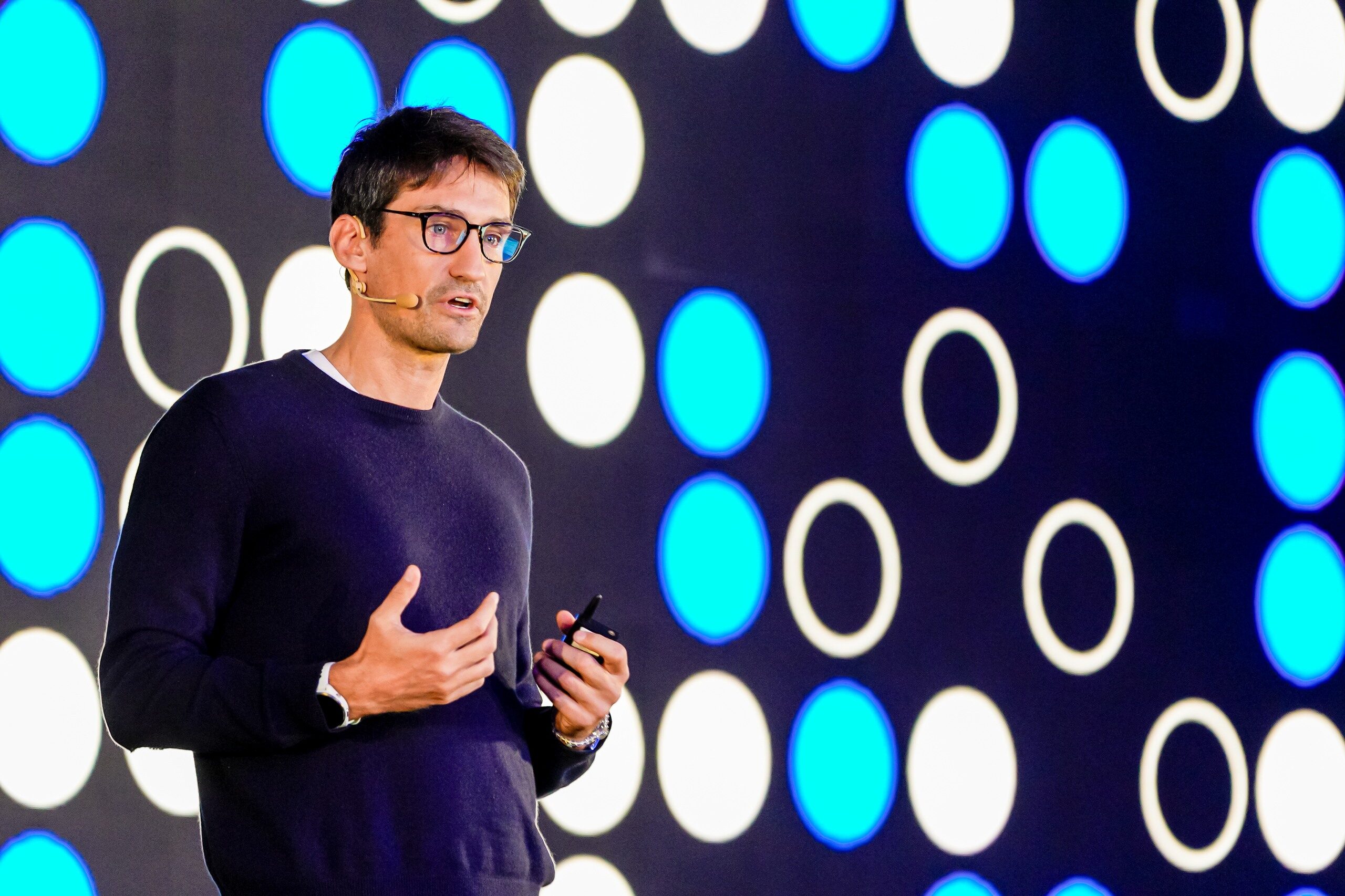
Guillaume Pousaz originally had ambitions to become an investment banker but, in 2006, he took a job at a Californian fintech company instead. This marked the start of his extraordinary journey into the payments ecosystem.
It wasn’t long before he started spotting bugs in the global payments machine. In 2007, he founded NetMerchant, which allowed United States-based companies to make foreign currency payments into Europe. Two years later, the Swiss-born founder launched a second startup called Opus Payments, focused on the APAC market. It was Opus Payments that would eventually become Checkout.com.
Checkout.com was born in 2012. The payments platform makes it easy for merchants to trade, solving problems many incumbents ignored. Traditional payment providers relied on aging infrastructure, with fragmented systems and slow innovation cycles. Pousaz believed merchants needed a modern, full-stack payments platform built for the internet economy.
For almost a decade, Pousaz bootstrapped Checkout.com, expanding his London-based company into 140 countries. “We always wanted to be global,” he says. “We have been granted licenses in every major market where we operate.”
“So many people told us it was impossible”
A global outlook is essential to companies that aren’t based in the U.S., Pousaz explains: “We had to go out and build a lot of geographies…to follow our customers.”
Once established across the globe, Checkout expanded into the U.S., opening offices in New York in 2022, then San Francisco and Atlanta in 2025. It’s now the company’s fastest-growing territory, with revenues up 80% year over year — but no one region, or customer, dominates. This diversification helps ensure resilience. “We’re sitting on a mature business,” he says.
While many rivals were built servicing a single large customer, Checkout has never been beholden to a single entity. “We were able to build for the ecosystem,” he says.
Today, Checkout.com powers payments for some of the world’s largest digital businesses, including Uber, Microsoft, Spotify, eBay, and Trip.com.
Pousaz candidly admits that Checkout’s growth has outstripped market expectations. “So many people told us it was impossible,” he says. “People told us, ‘You’re never going to be licensed in the [United Kingdom],’ and yet we’re one of the first payment licenses in the U.K.”
“Then people were telling us, ‘You’re never going to sign a Silicon Valley company,’ and we ended up winning Netflix.”
In 2018, Pousaz decided it was time to seek an investor to help him take the business to the next level. “Not because we needed money,” says Pousaz. “I was really looking for expertise, so my equation of value at the time…was that I was really looking for somebody who was an operator who would know how to run and build a business.”
After meeting dozens of potential investors, Insight Partners stood out, says Pousaz. “They have a business-builder DNA, they know how to operate businesses at scale, they had their Onsite team, and we were very keen on this.” Insight Onsite is a team of 100+ in-house experts that help Insight portfolio companies scale and grow.
In May 2019, Checkout.com raised its $230M Series A with Insight; at the time, this was Europe’s largest fintech Series A round. In June 2020, Checkout.com closed a further $150M Series B funding round, in which Insight also participated.
Checkout’s fundraising wasn’t core to business growth; it was an exercise in ensuring stability. Pousaz explains: “We’re doing the payments, so we’re basically in the flow of the revenue, and our balance sheet was essentially the sum of our retained earnings. Adding capital was mostly to shore up our balance sheet and become financially stronger than we would get organically.”
Subsequent funding rounds — a $450M Series C in 2021 and a $1B Series D in 2022, which Insight also participated in — helped sustain Checkout’s growth trajectory and solidified its reputation as one of the fintech sector’s greatest success stories.
Scale up your career: See all open roles at Checkout.com.
The investor POV
“He’s a special founder. There’s just an intense personality…and he had a clear vision for how he could keep compounding the business for a really long time.”
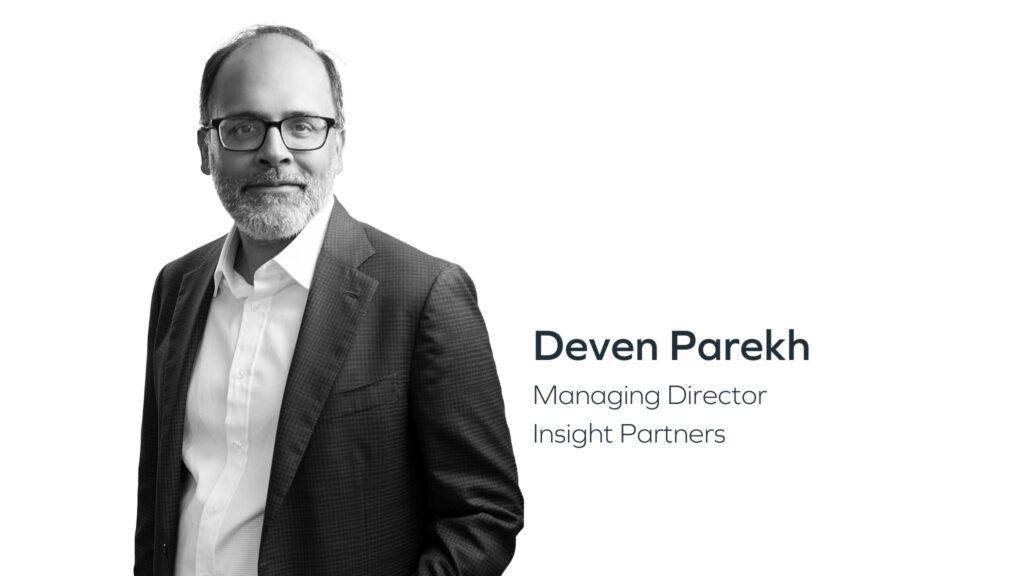
Managing Director Deven Parekh had heard of Checkout.com before they met, but a lunch with Pousaz won him over. Pousaz had bootstrapped the business to profitability — “That’s rare,” says Parekh — and had built it on a counterintuitive thesis. While rivals went after small clients first, Pousaz pursued bigger merchants on deliberately thin margins, on the basis that if he could make the economics work there, he could make them work anywhere. The goal was always global infrastructure for the enterprise rather than dependence on any single anchor customer.
“[It was] a next-generation tech stack in an industry where there were tons of older tech stacks and a total addressable market that is unlimited,” says Parekh. “He had a clear vision.”
According to Parekh, Checkout is a stellar example of compounding. “That’s the beauty of the business,” he explains. “If you serve markets that are growing at 30% and you keep your customers happy, you can grow at 30%…That’s what I like about the payments business model…that’s simple business but hard to execute.”
The relationship was founded on mutual respect. “Deven was the first person who really shook my hand and said, ‘Let’s do this,’” says Pousaz. “We’ve had an amazing relationship ever since.”
Pousaz stresses the value of having an investor who consistently shows up. “Deven is somebody who’s been 20 years in technology, somebody who was always available. He’s incredibly responsive, and somebody who gave me time and really cared about the business early on.”
Financial firepower and sector expertise
Insight Partners’ initial investment came at an inflection point. Checkout.com had already proven product-market fit, but now it needed a repeatable playbook to accelerate its global expansion.
Insight’s pitch was direct. “I get your story. We understand these types of businesses. You bootstrapped it, and now we’re going to the next gen, where we’re going to have to hire next-gen talent. We’re going to have to scale go-to-market, and it can’t just be you running around doing everything,” recalls Parekh. “That’s what we’re good at doing.”
Insight’s Onsite team came to London to support Checkout.com every quarter. “We used Onsite mostly for two things: go-to-market strategies and marketing,” explains Pousaz.
“When we raised our Series A, we had never spent a single dollar on marketing. We didn’t even have a marketing team.”
Operating Partner Gary Survis took the lead. Digging in for 1,000+ hours over the first few years of the relationship, Survis worked across nearly every dimension of Checkout.com’s growth — from sitting on hiring panels for early marketing employees to leading brand and messaging workshops that brought together the company’s full executive team. “What started as ‘We have no marketing function’ became something much bigger over time. The needs kept evolving as the company grew, and so did the work. That’s what a long-term partnership looks like.”
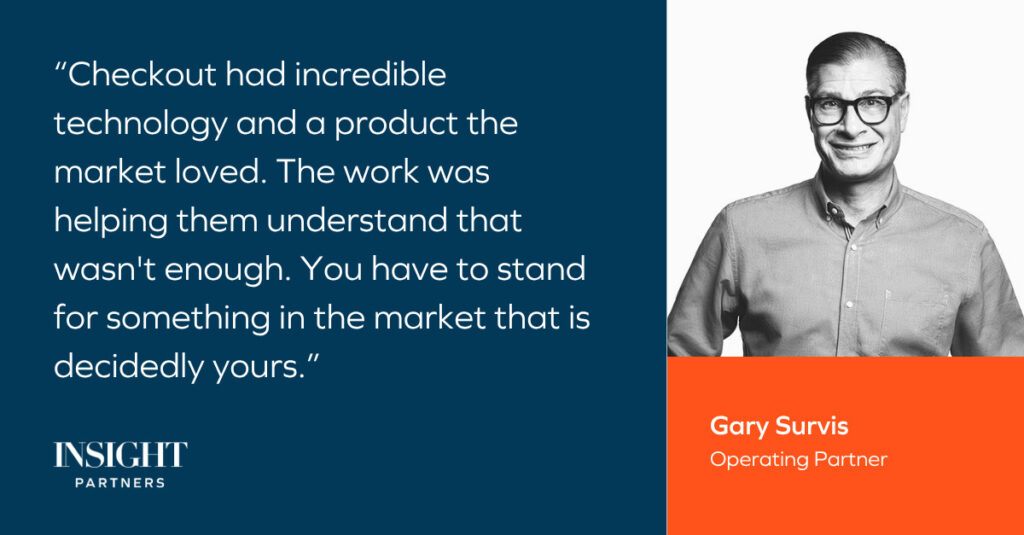
“[Survis has] been instrumental in the hiring,” says Pousaz. “[Onsite has] helped build the strategy; they’ve really helped us build the thing from the ground up.”
On the go-to-market side, it was less about reinvention and more “fine-tuning,” says Pousaz. “Sharing best practices of what [Onsite] sees in other companies.”
In the early years after the investment, Pousaz and Parekh spoke almost every week. “We would have a regular catch-up on Sunday morning,” reflects Pousaz. “He likes to walk and have a phone call and catch up on how the business is doing today.”
The depth and breadth of Parekh’s experience helping technology companies to scale made him the ideal sounding board for a fast-growing company. “The best CEOs are always looking for perspectives and always looking for challenge,” says Pousaz.
“We make our own decisions, we have our own ideas, but obviously we like to hear from other smart people, and [Deven] is definitely one of the people I always go back to.”
Pousaz and Parekh have worked together to navigate the ups and downs of the last eight years. This has created an unshakeable bond. “I will always be loyal to Deven,” says Pousaz. “I’m loyal to all my investors, but Deven was the first one. The same way you remember your first boss, you always remember your first investor.”
AI, agentic commerce, and the human operating system
Pousaz shows no sign of slowing down. “We’re committed to building the largest fintech company in the world,” he says.
Innovation will be crucial to this market dominance. “Velocity continues to be the number one priority,” he says.
“Our job is to bring innovation to our customers faster than they would get it elsewhere today.”
Pousaz is using AI workflows to accelerate technological change across the company. “Turning data scientists into Agents,” he explains. “Instead of having these very smart and expensive data scientists, but actually a limited output, how do you actually really scale that horizontally, leveraging AI?”
Despite being “positive” on the net impact of AI tools, Pousaz remains committed to “the human operating system.” Checkout’s headcount has increased almost 6x since that first investment, to over 2,000 people.
“We think that a company is only as good as the people, and having the best people here, having high human capital density, is the best way for us to be excited to work together, creating value together, and it’s a key priority for me as a CEO.”
Payments is a dynamic sector, and opportunities abound. Agentic commerce is becoming a real growth area for the business, Pousaz reveals, whereby AI Agents transact on your behalf. The technology is still in flux, so Checkout is building out frameworks to suit every possible scenario.
“When agentic commerce starts to take hold, when consumers are actually transacting through Agents, merchants are going to need infrastructure that can handle that,” explains Pousaz. “Checkout.com is built for that. We’re focused on making sure our merchants are ready for however this channel develops.”
“You’re always four years out”
Checkout.com has done the seemingly impossible: The world’s biggest merchants trust its platform to handle their revenue. “You’ve passed the highest level of procurement and compliance internally at any company, so you’re in a good place to go and sell additional services,” says Pousaz.
Parekh agrees that there is a long road ahead. “They’ve been able to successfully transition from a regional business to a truly global business. And there’s a huge amount of customers that are still sitting with legacy processors where Checkout can offer a next-gen platform and best-in-class customer service,” he says.
“There’s just so much business still to go get, and I think they’re really well positioned to go get it, because they’re investing heavily in the tech stack.”
The company’s future relies on Checkout’s transition from a single-product company to a true multiproduct platform, says Pousaz. Checkout could sell multiple things to its customers: “Everything from treasury, to card issuance, to payouts, to modern corporate banking.”
“Most fintechs have started in a corner of fintech or with a very pure play approach,” he continues. “But over time, fintechs are evolving to become true multi-product companies, and it’s going to be important for us to do so as well, and that’s where I’m really spending most of my time.”
That long-range thinking extends to agentic commerce as many major tech platforms launch their own protocols. “We’ve built a lot of frameworks already. When something is actually becoming the winner, or will translate into shoppers using Agents, the merchants can basically leverage Checkout to process those transactions.” In June, Checkout announced it had been selected by Microsoft to support digital products across EMEA, including Xbox and Microsoft 365.
“As a CEO today, what I’m working on has no impact on 2026 and probably very little impact on 2027 already, because so much of that machine is already in motion,” says Pousaz.
“What I’m working on today is really what’s going to happen in 2028 and 2029. You’re always four years out.”
Pousaz is energized by what the future holds. “I’ve been a CEO of this company for 15 years now, and I’m only 44, so I have another 20 to 30 years in me. I just love my work, I love my team, and we’re clearly ambitious,” he says.
“We have an athlete mindset at Checkout that is ingrained in everything that we do. It’s really about never being comfortable, being rigorous in planning, wanting to stretch the goals. Whatever you achieve, you’ll want to do more. So yes, we’re a very ambitious company.”
*Editor’s note: Insight Partners has invested in Checkout.com