In an era where AI-driven outbound tactics are increasingly ignored, building trust has become the cornerstone of closing enterprise deals — and small group events are emerging as one of the most powerful ways to do it. These intimate gatherings — typically between 15 and 25 participants — offer a high-touch, exclusive environment where authentic networking, education, and relationship building can flourish. As session moderator and Executive Vice President Charlene Chen puts it, “These are intimate, high touch and exclusive events… they really are focused on networking, education and relationship building and not selling.”
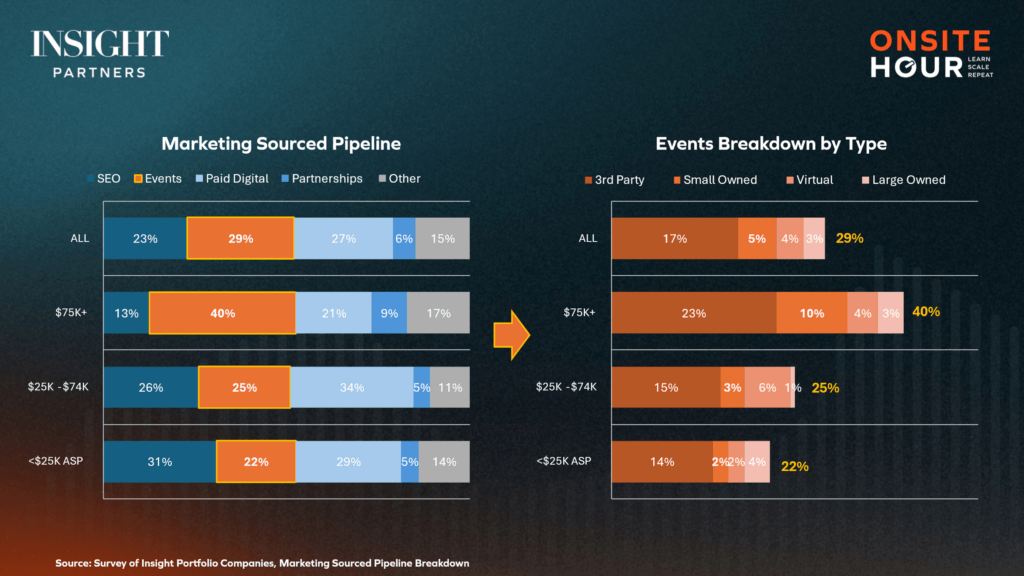
The data backs this up. In Insight’s 2024 Pipeline Generation Survey, companies selling larger deals (over $75,000) reported that events were 40% of marketing-sourced pipeline, and small, owned events alone were 10% of that marketing-sourced total (i.e., 25% of the events pipeline).
In a world saturated with digital noise, small group events stand out as a tangible, effective way to build meaningful relationships with decision-makers.
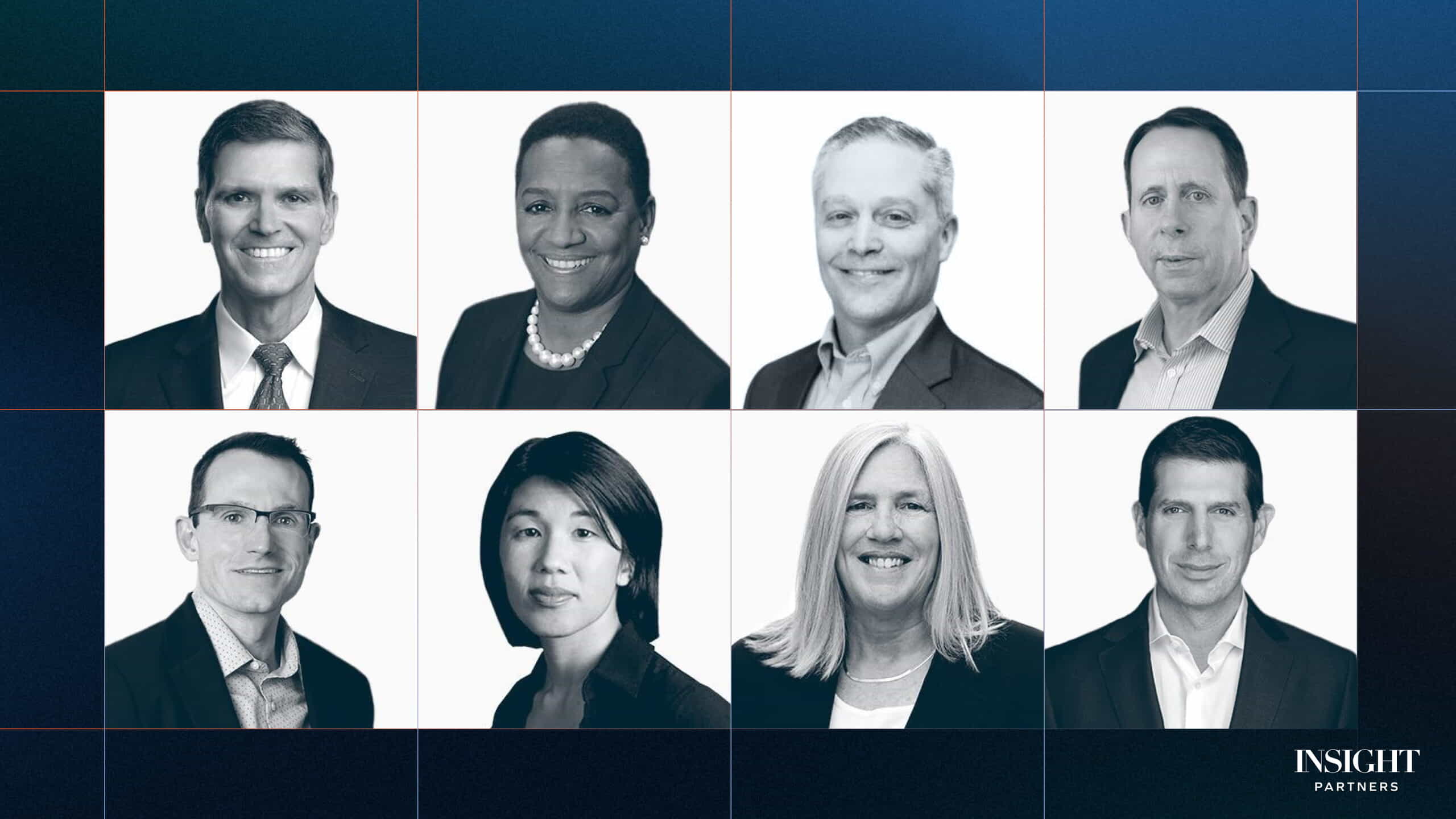
This piece comes from Onsite Hour, a weekly tactical series for portfolio companies, created by Insight’s 130+ in-house experts. Led by Charlene Chen and Executive Vice President Jeremey Donovan, the panel included Writer‘s Diego Lomanto, Reco‘s Andrea Bailiff-Gush, and Beanstalk Events’ Ray Cao.
“Quality connections and quality connectivity”
Selling to senior executives requires more than great products — it demands trust. As Lomanto explains, “If you’re going to go after an executive, a C-level type of sale… this is an absolutely vital strategy. You can’t get approval for large budget, large-scale projects without that buy-in at the highest level.”
For cybersecurity companies like Reco, trust is even more paramount. “Our ICP are typically the CISO,” said Bailiff-Gush, “and they can tell an authentic experience right away.” Small, candid gatherings allow these critical conversations to happen naturally.
Underlying all of this is something deeply human. “People do crave connection and connectivity, but they want quality connections and quality connectivity,” said Cao. In an era where AI-generated outreach is easily detected and ignored, “Small group settings are powerful accelerators for trust and relationship building,” he emphasized.
Donovan added another critical point: “It’s incredibly hard to engage prospects via cold outbound these days. Next to impossible.” In contrast, small group events offer executives real value: peer learning, relationship building, and authentic conversation.
What makes a small group event successful
Executing a successful event requires meticulous attention to detail. It’s not enough to simply gather people in a room.
Lomanto stressed the importance of logistics and format. Writer often runs events in a “salon” style, beginning with casual happy hour drinks before moving into a moderated group discussion. “You have to make sure you have a good moderator,” Lomanto said, noting that a good discussion leader can transform the evening. “The high quality white glove treatment is key; you’ve got to be meticulous about the details. It’s representing your brand. Everything that happens at the event represents your brand,” he continued.
Cao offered additional tactical advice: Always secure a private room to minimize distractions, carefully assign seating to foster meaningful conversations, and start by having each guest introduce themselves. He also recommends printing guest lists to help facilitate follow-ups, even if it pushes GDPR boundaries slightly.
How to drive attendance and fill the room with the right people
A well-planned event means nothing without the right people in the room. Driving attendance is an art in itself.
Bailiff-Gush outlined the “three by three by three” rule: “Three touch points before the event to drive attendance, three touch points during the event, and then three touch points after the event.” This multi-channel, multi-phase approach helps secure RSVPs and strengthen post-event follow-up. She also highlighted how working with partners can drive attendance. “For us, driving really good attendance helps if we’re doing it with someone, so driving attendance with a partner, driving attendance with an advisor, or doing it with a customer,” she explained.
Personal invitations from senior executives, not generic marketing emails, are essential. “You have to make it personalized,” Lomanto said, noting that having their executives reach out to establish a personal connection has been a game-changer for Writer.
Cao pointed out that even companies without “celebrity” CEOs can leverage their investors and advisory networks. “Leverage anyone who’s got credibility,” he advised. Small group events create network effects over time: The more high-quality people attend, the easier it becomes to attract others.
Donovan added another attendance-driving tactic: Encourage attendees to bring a plus one, ideally an “up-and-coming” leader, which both boosts attendance and diversifies the group.
Budgeting for success
Cost is always a consideration, but small events offer significant ROI when done well.
Bailiff-Gush recommends budgeting around $5,000 per dinner in major markets, and about $1,000 for breakfast events — which can be executed well for as little as $50 per head. Reco has found breakfast events particularly effective: “people are fresh,” logistical challenges like childcare are minimized, and the lower cost makes them a smart option for scaling. They also target non-hub cities like Des Moines or Cincinnati, where executives are eager for peer networking and where venue and catering costs tend to be significantly lower, making it easier to stretch budget without sacrificing quality.
Importantly, these events must be seen as long-term investments in relationship building, not just short-term lead generation plays.
Measuring impact beyond the obvious
While pipeline contribution is a key metric, these events should be viewed more holistically.
Measuring the success of small group events can be challenging. Lomanto said Writer aims for “a 3x return on pipeline” where possible, but he acknowledges that pipeline acceleration, brand affinity, and customer insights are equally important metrics.
Similarly, Chen adds that, “On its own, 10% of marketing-sourced pipeline is pretty good, especially via first touch attribution. But, there are additional benefits of these events, including pipeline acceleration, building customer relationships, and just being in the room with your target buyers. It’s a great way to learn about their challenges and test some of your assumptions and hypotheses.”
Ultimately, it’s not so cut and dry. Strong executive support is critical because the full impact of these events often unfolds over months or even years. Leaders must understand that trust and relationships are slow-cooked, not microwaved. “It’s really hard to measure [founder-CEO conviction].You have to have a leadership team that knows that these work, because it’s very easy to attack them,” added Lomanto.
“Test it”
For companies just starting with small group events, the best approach is to try it.
Bailiff-Gush offers this advice: “Test it. Always be transparent about numbers, even if there’s a failure, and what you learned from it.”
Starting small — even with just four or five highly qualified attendees — can build early momentum. Over time, this strategy can become a powerful flywheel for pipeline generation, customer loyalty, and product feedback.
This Onsite Hour content was unlocked for a public audience, but Insight Partners portfolio companies have exclusive access to weekly sessions with our experts across topics including GTM, tech, hiring, and more. Portfolio companies can learn more and sign up for upcoming sessions here: https://go-scale.com/page/events-hub
Note: Insight has invested in Writer and Reco.