Insight Onsite
More By The Author
Back
Article
What CEOs can learn from three AI transformations: Inside Glia, Leah, and Aptean
Insight Onsite | July 23, 2025| 3 min. read

As AI moves from novelty to necessity, CEOs are under pressure to turn promise into productivity — fast. The question is no longer whether to adopt AI, but how to do it in a way that drives real business value, without derailing everything else.
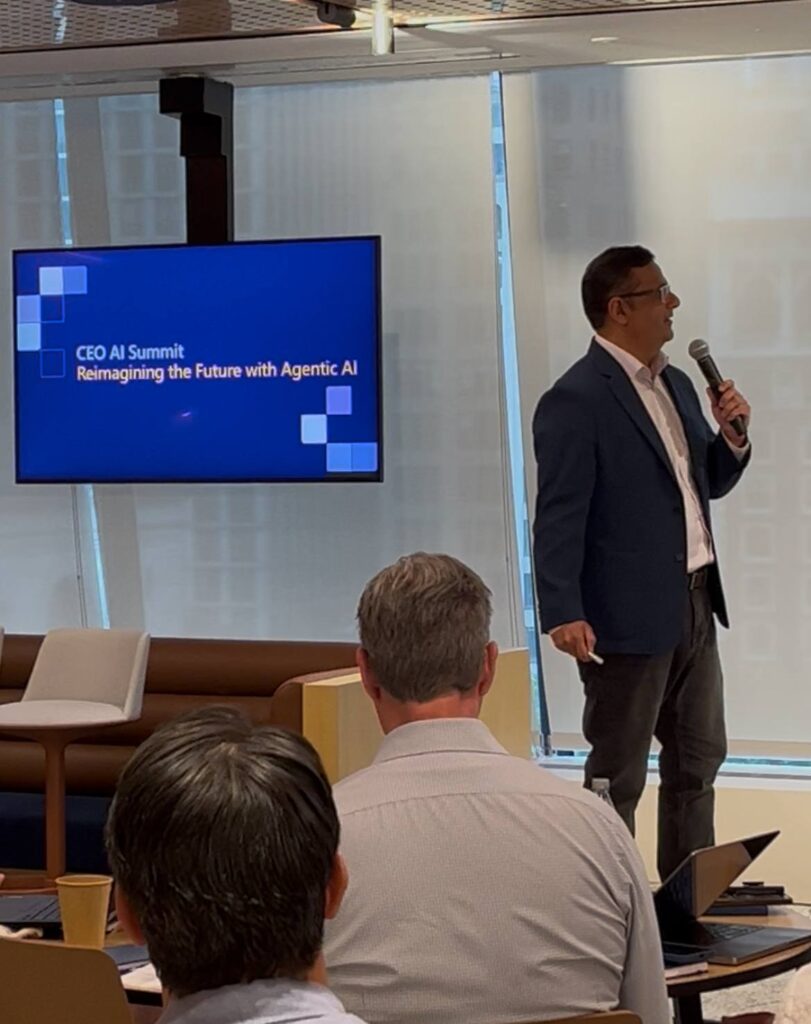
At Insight’s inaugural CEO AI Summit, top software leaders came together to share best practices for harnessing the power of generative AI to accelerate revenue and drive efficient growth. The summit convened CEOs across the portfolio to explore how AI is transforming every aspect of business — from platforms and pricing to org structure and strategy.
In one session, Anurag Malik of Leah, Justin DiPietro of Glia, and TVN Reddy of Aptean shared how they’ve used AI to reshape their companies. From replacing core platforms to changing org structures and pricing models, their stories offer a behind-the-scenes look at how CEOs are turning AI from hype into meaningful growth.
Reinvent the platform if necessary
At Leah, Malik and his team made a bold decision at the start of 2023. Rather than layer AI onto their legacy platform, they chose to rebuild from the ground up, despite the fact that the old product accounted for nearly 100% of revenue.
Malik explained that building a new AI-first platform within the same budget required a mindset of continuous self-disruption. Rather than sunsetting the existing platform, the company chose to reinvent it—unlocking the benefits of the new Agentic AI architecture, which quickly gained traction and generated $20 million in revenue in its first year. This was achieved without increasing headcount or ballooning R&D costs.
Their sales strategy focused on value from day one, avoiding long pilots or unpaid proofs of concept. Malik recalled prospects asking for free trials — “give it to me free for three months, six months” — but his team declined. “There’s no value for free stuff,” he said. Instead, they focused on high-volume legal firms and partners like PwC and KPMG, who saw long-term potential in AI-powered workflows.
Don’t sell software — sell labor savings
At Glia, DiPietro said the company’s guiding strategy is to “stop selling software and start selling labor savings.” In other words, AI wasn’t just used to enhance product features; it was deployed to reduce headcount, increase ROI, and fundamentally shift the value proposition.
Rather than building a new product from scratch, Glia integrated AI into its existing contact center platform. The team mapped every user persona — agents, managers, executives — and asked what repetitive tasks could be either automated or “elevated” with AI.
To generate ideas, DiPietro ran an offsite with his R&D leaders using post-it notes and rapid brainstorming exercises. “It gets really hard after six minutes,” he noted, but the outcome surfaced both obvious and unexpected automation ideas, many of which shipped within three months.
Internally, Glia introduced Gemini and GitHub Copilot to accelerate employee productivity and created an “AI Falconeer” team to demo experiments and evangelize use cases across the company. DiPietro himself began prototyping product ideas at home — even though he had never coded before.

One of the most actionable insights from Glia’s AI transformation is how it restructured pricing to reflect increasing levels of AI functionality and customer value.
Rather than tacking on AI as a feature or add-on, Glia built a “3-5-7” pricing model. This structure doesn’t just differentiate product tiers — it aligns pricing with outcomes, adoption, and AI depth.
DiPietro emphasized that these tiers aren’t just about features; they’re part of a commercial strategy that allows customers to scale into AI adoption over time. “We lay out different packages based on that,” he said. Customers can start small, prove ROI, and expand into higher tiers as they see measurable results.
Use your data advantage — and your people
Reddy faced a different kind of AI challenge. His company manages 85+ products across 11,000 customers, the result of 70 acquisitions over 10 years. With that level of complexity, Reddy’s fear wasn’t about keeping up with competitors’ feature set; it was about disruption. He imagined two people in a garage, leveraging AI to build an ERP that met most customers’ needs, then undercutting everyone on price.
Aptean responded by leveraging its core strength: deep vertical expertise data. The company’s portfolio spans everything from bakery ERPs in the Netherlands to Martin Brower and Tony’s Chocolonely. Instead of building generalized AI tools, Aptean is using its data footprint to train verticalized agents and intelligent workflows that competitors can’t easily replicate.

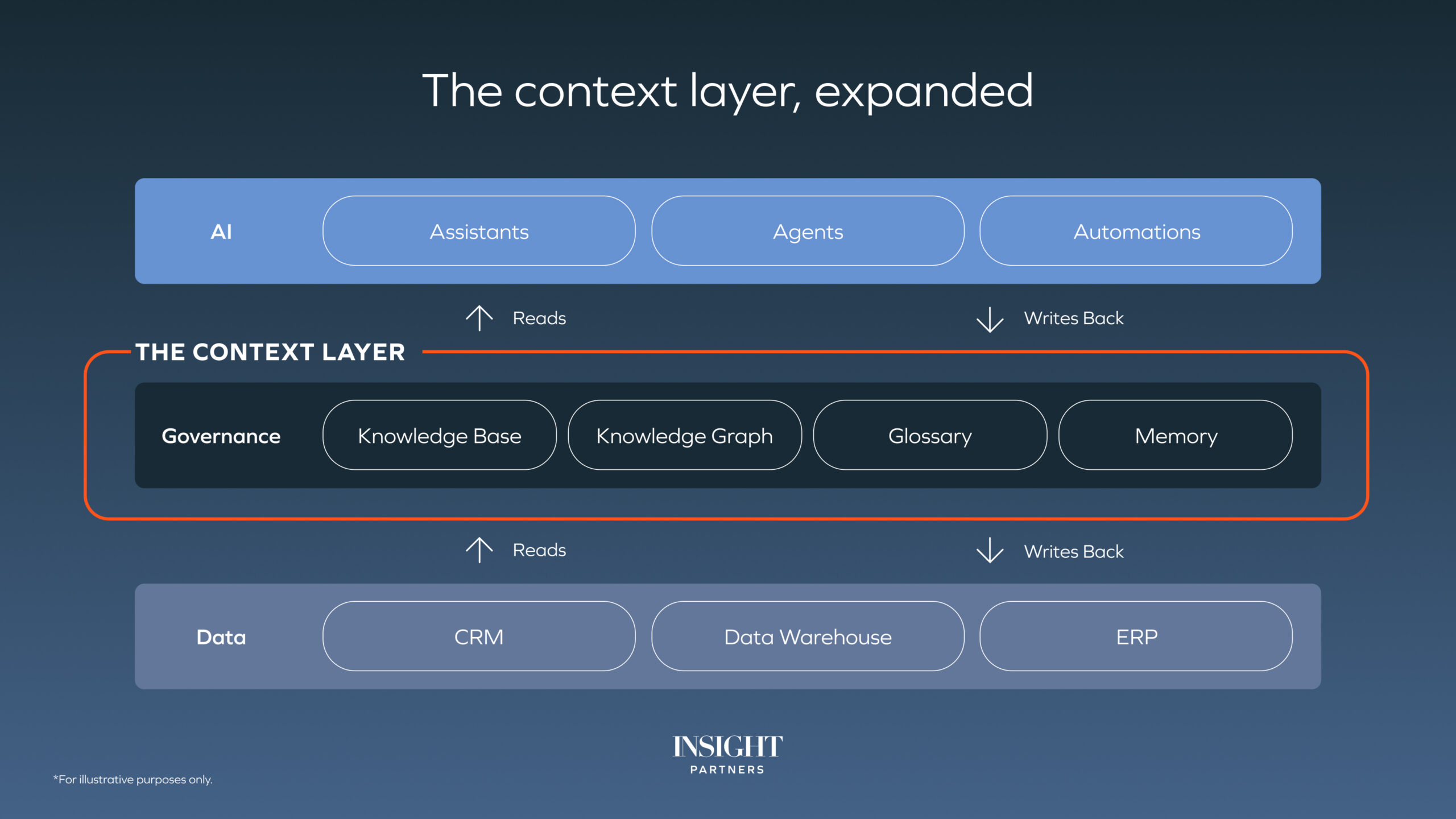
Reddy believes high-quality data is the foundation of effective AI — empowering intelligent workflows that operate seamlessly behind the scenes. So the company invested in building that intelligence layer internally. A small team of senior engineers — what Reddy called “our best people” — was tasked with building the foundational tools. Meanwhile, Aptean hired new grads into AI-native cohorts to help accelerate the cultural shift.
They also created their own design-to-development pipeline using tools like V0 and Windserf, focusing on what Reddy called “concept cars,” or functional prototypes that test AI experiences before they go to market.
While monetization is still evolving, Aptean is experimenting with both bundling (essential, professional, premium tiers) and cross-selling AI-powered modules into existing ERP customer accounts.
“But the expectation has changed”
Each CEO emphasized the importance of hands-on, top-down leadership. Malik said, “AI-first mindset has to be driven from the top down and in every employee.” DiPietro echoed the point, sharing that he and his cofounder constantly challenge assumptions like, “Why can’t we just use AI for that?”
Reddy took a more operational stance, pointing to workforce planning and margin expansion. He highlighted customer impact. “At Aptean, case resolution time has been reduced by 25%, which has positively impacted customer satisfaction and engagement. Everybody says ‘Meet expectations,’ but the expectation has changed.”
AI is now a required part of every sales conversation. As Reddy noted, “Even a $20 million bakery is not going to buy a solution from us if we don’t talk about AI.”
Note: Insight Partners has invested in Leah, Glia, and Aptean.