Insight Partners
More By The Author
Back
ScaleUp:AI
How Acceldata is teaching data to manage itself
Insight Partners | January 20, 2026| 3 min. read
Most modern enterprises face an impossible equation: more data, more complexity, and fewer people to manage it.
As companies have embraced cloud computing, real-time analytics, and AI, their data ecosystems have grown vast and increasingly fragile. The technologies designed to make businesses smarter are now overwhelming them.
Some of the most advanced organizations are discovering that the hardest part of being data-driven isn’t collecting information; it’s keeping that information healthy, reliable, and ready for use.
Rohit Choudhary spent years building large-scale data systems at major companies such as Hortonworks and Zalando. He saw how only the Amazons and Googles of the world could afford to build advanced data management systems, and how overloaded systems were a barrier to growth.
Building the blueprint
So, Choudhary and three of his Hortonworks colleagues joined forces to launch data management platform Acceldata in August 2018. “We felt that there was an opportunity to create a huge company, starting with the observability layer,” he says.
With $2.1M seed funding and decades of experience between them, the four cofounders — Choudhary as CEO, Ashwin Rajeeva as CTO, Raghu Kandikonda as VP of engineering, and Gaurav Nagar as a senior architect — had a simple mission: to help enterprises regain control of their data by making it reliable, visible, and self-sustaining.
Acceldata works like a health monitor for enterprise data. Instead of juggling dozens of disconnected tools, engineers can use Acceldata to track the performance, quality, and cost of every data pipeline from a single dashboard.
“There are two fundamental ways customers like to use Acceldata,” explains Choudhary. “One is to optimize their infrastructure … to reduce the total cost of operations and … get more reliability.”
The second is about assuring the quality of the data itself, particularly data fed to AI for analytics and reporting. “You want to have absolute clarity and high quality,” he says.
The platform quickly gained popularity with both customers and investors. Its client base now includes major global players such as Oracle, Verisk, PubMatic, and six of the top twelve global banks — and Acceldata continues to double its Fortune 500 customer base year over year.
To date, Acceldata has raised more than $100M across three rounds: an $8.5M Series A in 2020, a $35M Series B led by Insight Partners in 2021, and a $60M Series C in 2023, which Insight supported. In 2023, the company also acquired AI startup Bewgle to enhance its capabilities around large language models and AI observability.
“Agentic is no longer just a dream”
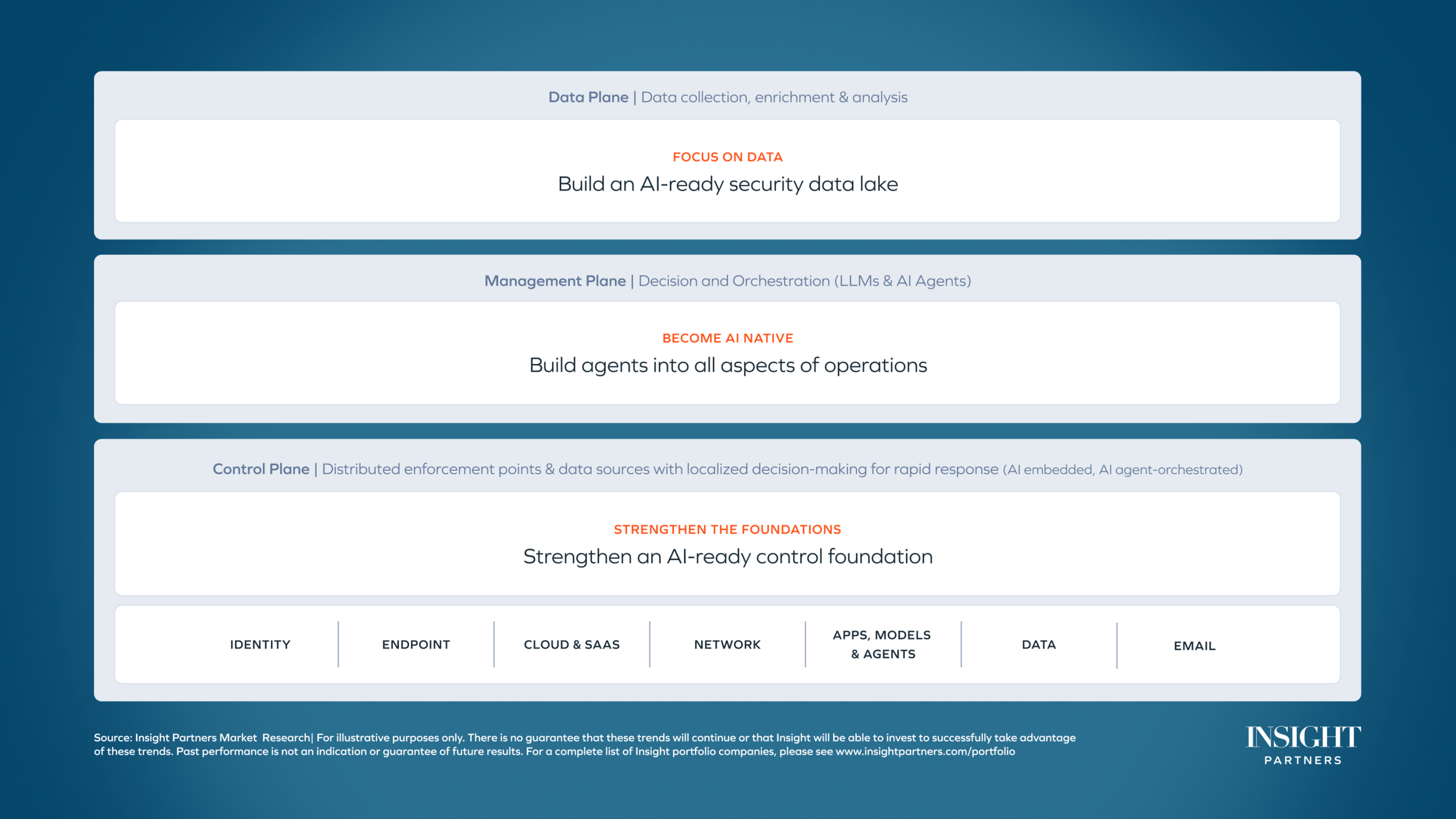
What began as a tool for understanding complex systems has evolved into something more ambitious — a platform that not only observes data, but learns from it. It’s a step towards what Choudhary calls “agentic data management,” where data systems can monitor, optimize, and even heal themselves.
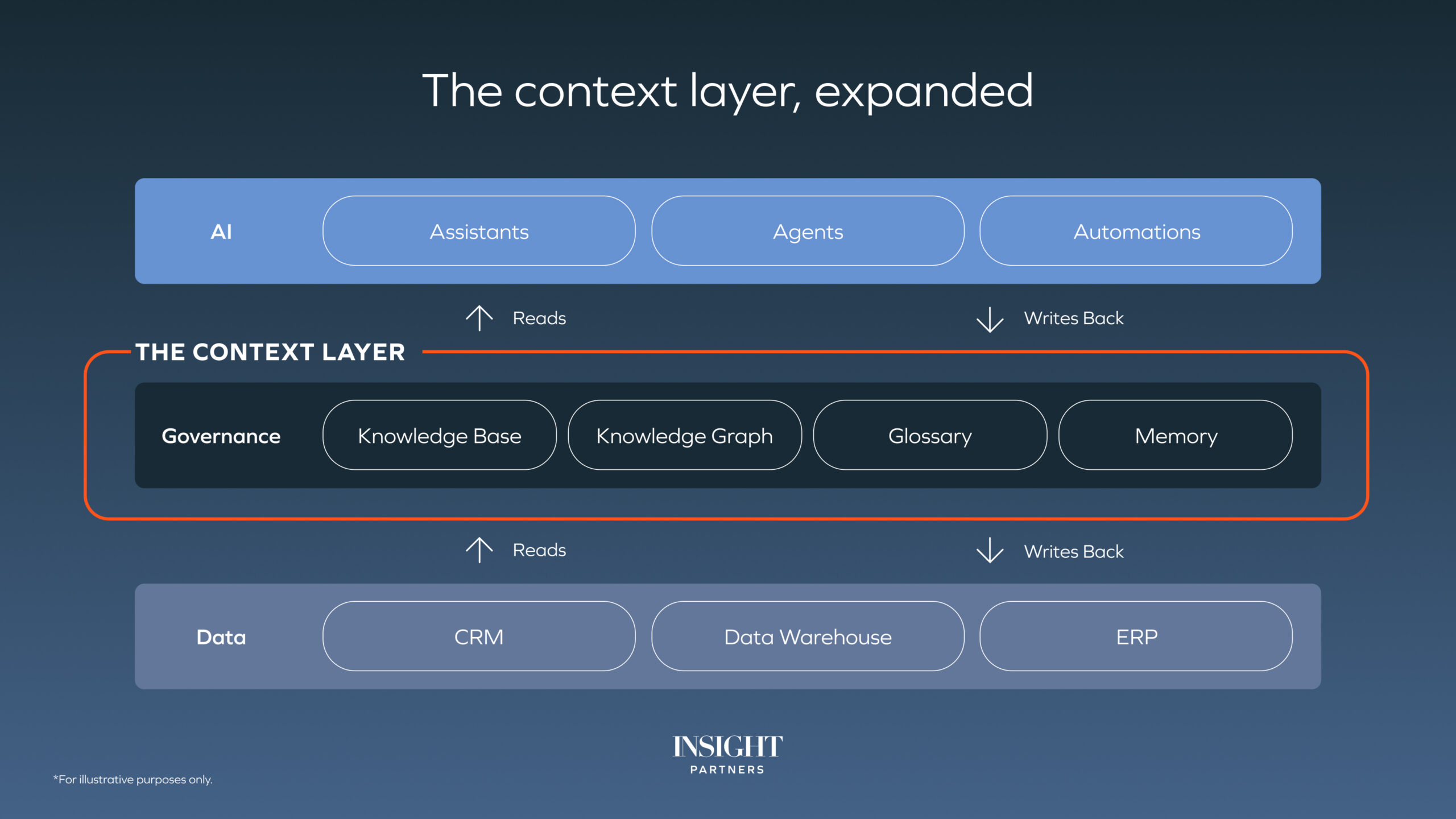
“About two years ago,” he recalls, “we realized that the ChatGPT moment was going to arrive for structured data as well. And we figured out that a lot of products which exist in the enterprise — for cataloging, governance, security, data quality — all of those will get rolled into one using a single agentic layer. We ended up creating that agentic layer for enterprise data.”
“Agentic is no longer just a dream. It’s arrived, and it’s arriving big time in the enterprise data space.”
The platform is designed to think, learn, and take autonomous corrective action to resolve data issues without manual human intervention.
“Now you can just give an instruction [to] improve all data related to marketing,” says Choudhary. “The quality of the marketing data should go up by 80% and the system automatically … lets you know proactively that your data quality is falling.”
Acceldata is currently focused on advancing its Agentic Data Management Platform, launched in February 2025. “Enterprises don’t need to wait for a long period of time to adopt AI in their workflows, because they can use Acceldata as an agentic data management platform and get in control of their data,” says Choudhary.
Optimizing for intelligence and creativity
Acceldata is its own use case. “In our business, we ship a lot of software,” Choudhary explains. “We used to do manual testing and vulnerability fixes … we don’t have to do it anymore.” An internal agentic layer now scans the software supply chain, identifies vulnerabilities, tests fixes automatically, and deploys updates without human intervention.
Employees are encouraged to automate the tasks they dislike to concentrate on more creative tasks. “If there is a part of your job that you don’t like, we would prefer that you create an AI tool or workflow Agent that you can just offboard all your boring work to so that you can just be creative, have fun, enjoy work, and have a great career.”
AI is influencing how the company hires, too. “At this stage of AI development, it’s unlikely anyone will have all the skills required in the next two years,” says Choudhary. “So, what we are optimizing for is extreme levels of intelligence and learning capability.”
A new world of work
Choudhary predicts that agentic systems will transform how work gets done. “Businesses will get a lot more efficient … process-oriented work will get a lot [easier] … companies will be able to get more compliant … workforces will be smaller.”
Within Acceldata, he’s seen “a lot of productivity unleashed” as AI boosts sales, marketing, and engineering output, though he admits there’s “competition between actual headcount and Agents.” He believes the wider impact of AI is still under-discussed.
“We’re glossing over this strange state of the economy, which is very slow to hire but quick to fire.”
At the same time, the surge of AI-generated content — “code, marketing material, follow-ups” — is adding “a lot of cognitive load” on workers, he says. “I don’t think humans have the capacity right now to process all of that.”
The future takes care of itself
Choudhary has no doubts about AI’s potential but cautions that agentic systems may be overhyped. True progress, he says, will require “clarity of purpose” rather than blind faith in automation.
Still, he expects near-term “productivity and efficiency gains” that will unblock innovation, and a longer-term shift towards “a generation of abundance” where everything is personalized and available on demand.
“If you want to watch movies, you can make your own movies,” he predicts. “Your education will be personalized. Your health care will be personalized. I think it’ll be a completely different generation.”
*Note: Insight Partners has invested in Acceldata. This article is part of our ScaleUp:AI 2025 Partner Series, highlighting insights from the companies and leaders shaping the future of AI.