Back
Leadership
How Precisely helps enterprises trust the data behind agentic AI
Insight Partners | January 29, 2026| 3 min. read

From copilots to autonomous Agents, organizations are starting to embed AI into every layer of decision-making. But they don’t trust the data that powers it.
While 60% of organizations view AI as the top influence on their data strategy, only 12% say their data is truly AI-ready. And although 76% rank data-driven decision-making as a top goal for their data programs, 67% still don’t trust the data they rely on for these decisions.
“Most organizations adopt AI quickly and then find out that their data foundations are not ready,” says Dr. Tendü Yoğurtçu, CTO at data integrity company Precisely, which is working to change that.
Precisely helps more than 12,000 organizations, including 95 of the Fortune 100 companies, build trust in their data so they can make confident decisions and power their AI, analytics, and business operations effectively.
And it’s been doing it since 1968, when Whitlow Computer Systems (later Syncsort, before rebranding as Precisely in 2020) first began tackling the challenge of data integrity in the mainframe era. From batch computing to the cloud, the company has evolved through every technological shift, refining how organizations ensure their data is accurate, consistent, and trustworthy.
Today, as enterprises race to deploy agentic AI, those same principles remain top of mind. Systems that make decisions autonomously depend on data they can trust.
Context is a competitive edge
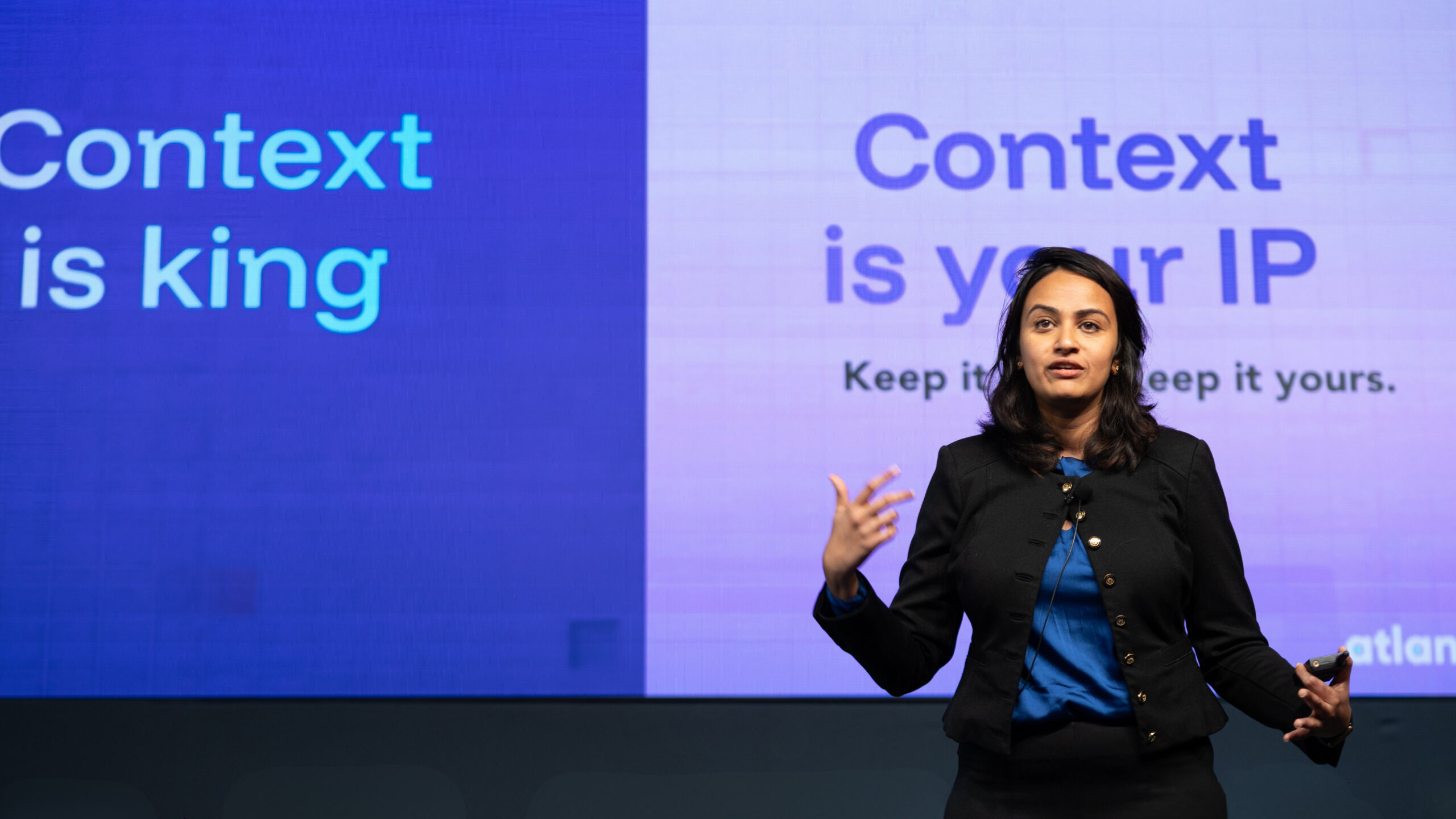
Yoğurtçu believes many organizations are overlooking a prominent factor that determines data’s real-world value: context.
“What’s not being discussed enough is the source and context of data,” she says. Public data is the foundation for all large commercial models, but it offers no competitive advantage.
“Proprietary data — for example, a healthcare company with customer transaction data of 25 years — that’s where the differentiation lies.”
“Proprietary data — for example, a healthcare company with customer transaction data of 25 years — that’s where the differentiation lies.” Alternative or third-party data, adds Yoğurtçu, is where “context becomes critical and enables more accurate outcomes.”
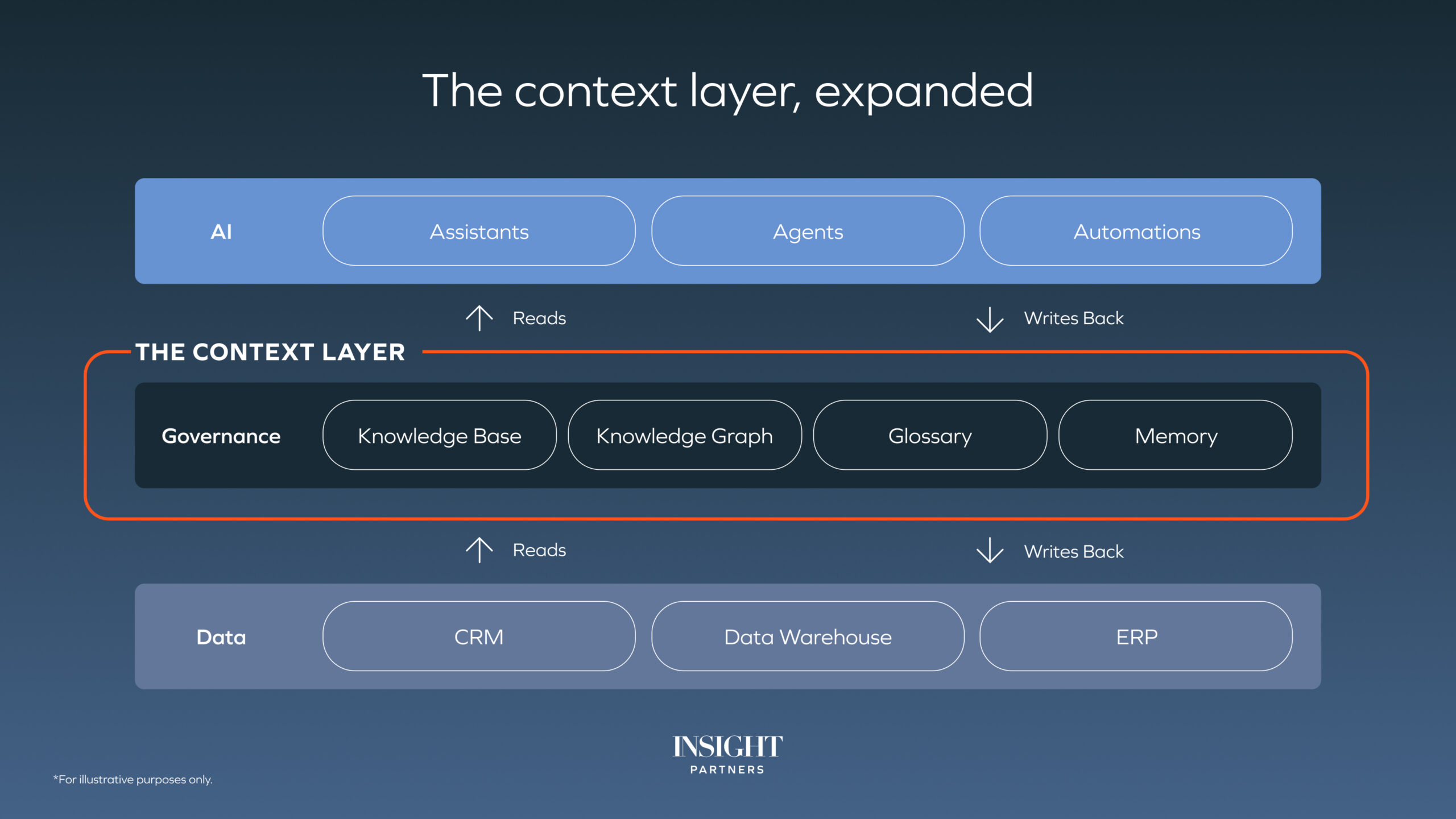
This mirrors a broader trend in applied AI: context engineering. The next wave of AI progress depends less on writing better prompts and more on systematically designing and managing all information that surrounds an AI model to maximize its performance and reliability.
This layered understanding of data underpins Precisely’s approach to data integrity. In practice, the company’s platform enables enterprises to enrich their proprietary data with external intelligence, such as geospatial or demographic datasets, so that every prediction or recommendation is grounded in a real-world context.
But, as Josh Rogers, Precisely’s CEO, explains, data integrity is only one half of this equation. Two fundamental sources of context make agentic AI work effectively at scale: data and human intervention. If either is unreliable, the AI’s decisions will be too.
Build from the inside out
Becoming fully “AI-ready” means building a culture, infrastructure, and workforce that can use AI confidently and creatively, says Yoğurtçu. At Precisely, that starts internally.
“We use AI internally…for R&D, [for] accelerated product innovation, [and] in marketing for new content creation, and enabling go-to-market teams with recommendations and personalized experiences,” she says.
Precisely has also launched a company-wide AI at work initiative. “With AI at work, the goal is to support and upskill…every employee in the company in AI literacy,” she explains. Every employee goes through onboarding and hands-on training on how to use copilots in their daily tasks.
That initiative has helped turn AI from a single department’s project into a shared capability. Engineers use copilots to prototype and test faster; product managers visualize new ideas; marketers and sales teams experiment with personalization at scale.
“We have seen these technology disruptions, and every time it happens — whether it’s big data, cloud, AI — it accelerates.”
This approach means Yoğurtçu looks for a certain kind of tech talent. “If someone is able to learn how to learn, that’s a plus. We have seen these technology disruptions, and every time it happens — whether it’s big data, cloud, AI — it accelerates. So someone who is able to learn quickly becomes an asset.”
“The next phase is going to be reimagining the business model with an agentic AI-first state of mind”
Much of the discourse around AI adoption is focused on cost savings and productivity, but Yoğurtçu argues that the most exciting opportunity lies in agents working across departments and multi-Agent systems.
“AI Agents could talk across multiple enterprise applications, exchange context, and enable solutions that we didn’t even imagine previously.”
That shift is already underway at Precisely. Within the Data Integrity Suite, AI Agents are now exchanging context between data integration, quality, and enrichment tools, proactively identifying issues, and advising users before problems occur.
“We are also evaluating how the AI Agents could help in sales and also IT operations with some of the complex workflows,” says Yoğurtçu. “We are in production today using copilot Agents in our R&D development processes, and we are seeing up to 30% improvement in the life cycle of software and product innovation.”
Earlier in 2025, Anthropic found that multi-Agents beat single Agents by up to 90% on complex research tasks by dividing the task into sub-tasks and pursuing multiple independent directions simultaneously. It’s a glimpse of what enterprise-scale collaboration between AI Agents could look like — and why Precisely’s connected data foundation matters so much.
In this new model of enterprise intelligence, data goes beyond supporting workflows, now helping redesign them. And as these agentic systems evolve, Yoğurtçu believes they’ll change how industries operate altogether.
“The next phase is going to be reimagining the business model with an agentic AI-first state of mind, and thinking about how the multiple AI Agents will be orchestrated across multiple enterprise applications.”
Building on a 50-year foundation for AI
After more than five decades helping organizations build data integrity, Precisely sees it as the essential foundation for unlocking intelligent automation at scale.
“I joined Precisely because I saw the opportunity to drive growth through innovation,” she reflects. “Through transformative products, and technology disruptions, we’ve made the company a thought leader in data and AI.”
And it’s helping its customers do the same. The companies expected to lead the AI era are those that can trust their data, enrich it with context, and activate it through connected systems.
*Note: Insight Partners has invested in Precisely and Anthropic. This article is part of our ScaleUp:AI 2025 Partner Series, highlighting insights from the companies and leaders shaping the future of AI.