Insight Partners
More By The Author
Back
Article
How Insight Partners’ Government Advisory Board helps companies scale in government markets
Insight Partners | August 25, 2026| 5 min. read

Federal, state, and local government spending is one of the largest markets in the world, and one of the most opaque. In 2025, the federal government committed about $793B on contracts, a $17.8B increase from 2024.
For startups, winning government business means maneuvering through a maze of security, procurement, and compliance requirements that can take years to understand. Few startups know how to navigate it, and fewer still get through the door at all.
Managing Director Nick Sinai leads Insight’s government advisory practice to help portfolio companies build a thriving public sector business—across sales, marketing, compliance, and government affairs.
With federal service that includes four years in the White House Office of Science and Technology Policy, Sinai recognized that Insight and its portfolio would benefit from the strategic counsel of people who have served at the highest levels in federal agencies and the military.
“It became clear to me that we could bring…expertise, guidance, and advisory to the broader portfolio,” Sinai says. “Great government leaders, operators, policymakers who have decades of experience.”
That group became Insight Partners’ Government Advisory Board (GAB), a group of seven advisors who advise Insight and its portfolio companies about the opportunities and challenges of serving government customers.
The GAB launched in 2022, and Sinai and fellow Managing Director Richard Wells still lead the board today. The late Secretary Ash Carter, the 25th United States Secretary of Defense and longtime Professor at Harvard University’s Kennedy School of Government, also previously served as the chair of the GAB.
Meet the board
The board was deliberately built to represent a wide range of leadership and policy-making experience across federal civilian, defense, and intelligence agencies. What unites its members, says Sinai, has less to do with their resumes than a shared instinct.
“They’re passionate, as am I, about great software and technology and AI to support the mission, and they understand how hard it is to buy and scale great technology in government.”
General (ret.) Joseph Votel spent 39 years in uniform, commanding special operations and conventional forces at every level, including as Commander of U.S. Central Command and U.S. Special Operations Command. On the GAB, that translates into direct, practical counsel. “The biggest way I’ve been able to help Insight is by advising leadership…on people and organizations that they ought to reach out to,” he says, “and demonstrating how these kinds of software-based solutions can really make a difference for our military forces.”
On the cyber and IT front, the board includes Essye Miller, former Principal Deputy and Department of Defense Chief Information Officer. “I spent 35 years with the Department of Defense with a career spanning information technology, information management, and cybersecurity,” says Miller.
General (ret.) Timothy Haugh, former Director of the NSA and Commander of U.S. Cyber Command, has deep experience in leading large technology organizations in the government. “We (the GAB) help companies put into context what the challenges the government has, and how portfolio companies can position themselves in a way to align their product and their talents with a clear national security need.” Haugh says.
Lieutenant General (ret.) Jack Shanahan brings a similar depth in defense technology, having built and led Project Maven and the Department of Defense’s first two dedicated AI programs. “My experience was really as the CEO founder,” he says, “[so I] can be very sympathetic and empathetic with all the founders who are taking these companies and trying to get business with the national security enterprise.”
On acquisition and policy is the Honorable Dr. Will Roper, who, as the Air Force and Space Force’s top acquisitions executive, controlled an annual budget of $60B — a vantage point on government spending that most founders never get close to. “I enjoy working with Insight portfolio companies because it just continues what I loved when I was in government service,” he says.
Nicole Wong has sat on both sides of the table, having served as U.S. Chief Technology Officer under President Obama, Google’s vice president and Deputy General Counsel, and Twitter’s (now X) Legal Director for Products. “I specialize in advising high-growth, high-technology companies, primarily in the area of international regulation for privacy and content, and of course, most recently, AI,” she says.
The Honorable Sue Gordon brings decades of intelligence leader to the group. A former Principal Deputy Director of National Intelligence, Deputy Director of the National Geospatial-Intelligence Agency (NGA), and senior CIA official, she is an expert on innovation, cybersecurity, and emerging technologies. Among her many accomplishments to drive partnerships and leverage innovation, Gordon led the establishment of In-Q-Tel, the CIA’s venture arm.
“Use us as a testing board of ideas”
There’s no single template for how GAB members work with portfolio companies. “My mission is to matchmake,” says Sinai. He pairs advisors and founders based on sector, agency, and stage. Some relationships become formal advisory positions; others are lighter touch, such as a check-in before a board meeting or a second opinion on a GTM plan.
Some founders benefit from personal, subject-specific sessions, says Miller. “To sit down and do a one-on-one of, ‘Here’s what the organization looks like, here’s how they operate, here’s where you need to target your conversations, and here are the rules and regulations that go along with that’ — it becomes a little less mysterious for them and helps them shape their strategy much better.”
Others work on the group level. Haugh says that one of the best ways to leverage the GAB’s joint expertise is to “use us as a testing board of ideas,” inviting members to critique approaches before taking them to a government customer.
A common thread for all the GAB members is their role as translators. “If you don’t have the language right, what might have been a great opportunity turns into a detriment,” says Roper. “I find most [founders] don’t understand the inner workings, and they shouldn’t, because they’ve not had that experience,” agrees Miller. “[Making] it a bit clearer and less of a gray space [allows founders] to take advantage of the opportunities that are available.”
Shanahan’s role is often about redirecting a product rather than rebuilding it, helping founders see a government application for a technology they hadn’t originally considered. “That’s a wonderful piece of technology,” he tells founders, “but have you thought about it in this way? Let us point you in a slightly different direction. Here’s what we think it could do.” It’s the kind of pivot, he explains, that every startup eventually has to make.
Navigating bureaucracy
One of the main challenges portfolio companies face is discerning which government opportunities are worth chasing.
Pursuing the wrong kind of funding is risky, says Roper, who spent years approving Air Force and Space Force budgets. “I have a pretty good instinct for when something’s a dead end and when it isn’t, and that’s one of the hardest things in government to know…there’s so much R&D money that is a cul-de-sac.” Spotting that difference, he says, is one of the most valuable things the board offers.
Another recurring friction point is security accreditation: getting a company’s technology certified to run on networks with specific security requirements. “It’s not written down in one place where you can just go research it,” says Roper. “This inside baseball knowledge you pick up from within government service is often what companies need.”
Shanahan sees a broader, structural challenge. Much of the work he does with founders is about helping the Pentagon complete a shift he spent his own career working towards — moving from “an industrial age hardware company” to “a digital age software-centric company.” Companies selling into government have to navigate a bureaucracy that often stifles its own ambitions.
Hawkeye 360’s path to IPO
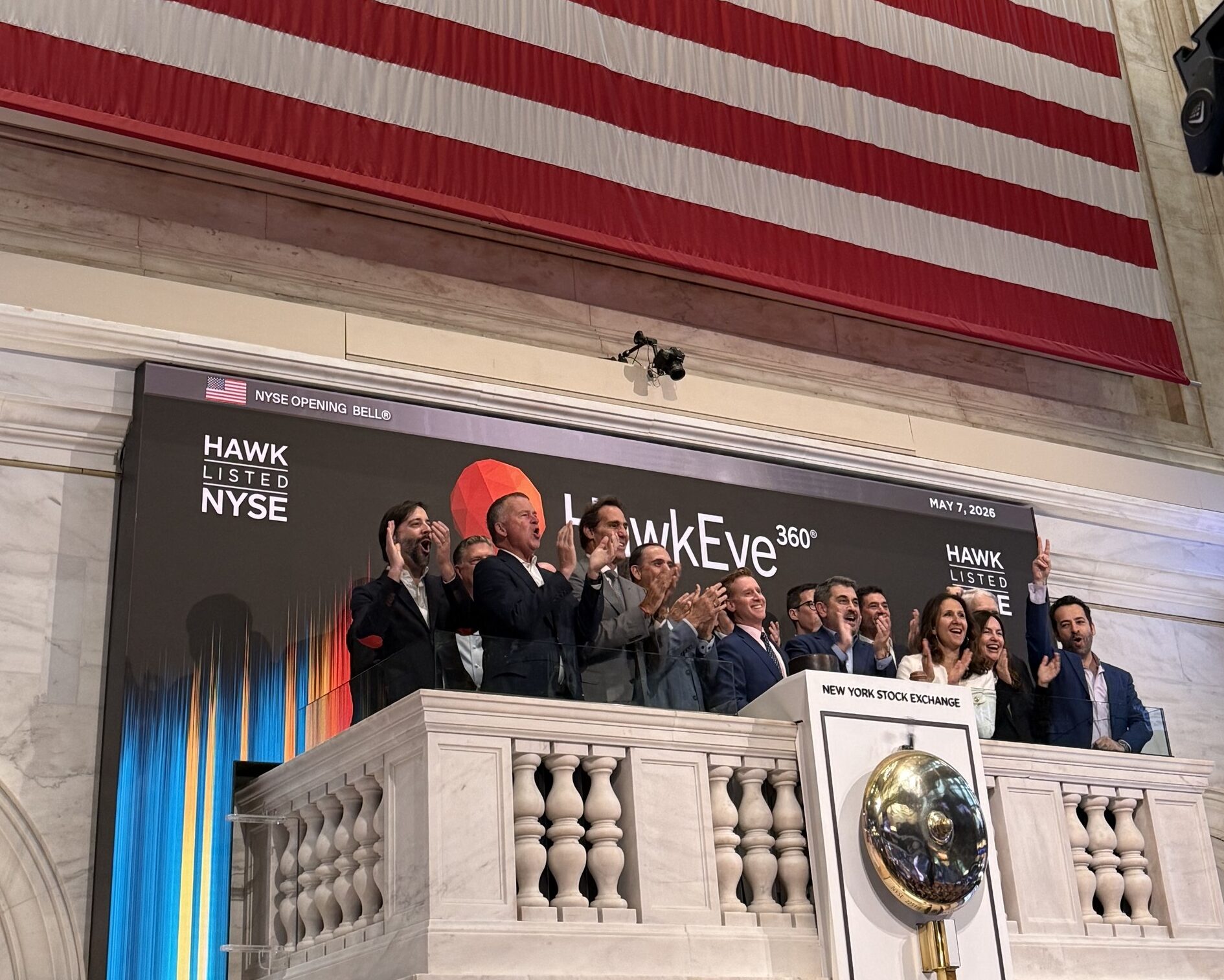
Commercial signals intelligence company HawkEye 360 has navigated those challenges with the GAB’s help. Sinai led Insight Partners’ Series D investment in the company in 2021 and served on its board for around five years, collaborating with CEO John Serafini to grow HawkEye into the leading commercial provider of space-based signals intelligence. Miller served as a formal advisor focused on IT and cybersecurity, and Gordon became a close mentor to Serafini.
The company went public in May 2026 at a $3.15B valuation, having raised $416M in its IPO. Insight retained a significant ownership post-listing, making it one of the company’s largest shareholders.
For Sinai, the outcome is proof that the model works. Sustained, senior-level expertise from people who understand both the technology and the customer can carry a government-facing company all the way to a public listing. “It’s been a lot of fun to encourage the company as they have refined not only [their] AI strategy, but the execution, so that it actually impacts the mission.”
A word of advice for founders
Despite the hurdles, the GAB members agree that founders shouldn’t waste any time making inroads with government.
“Jump in, the water’s fine,” says Votel. “It’s a hard environment to operate in, but it doesn’t get easier by holding off. Understand what the problems are that people are trying to solve, and then try to help be a problem-solver for them.”
Wong’s advice pertains to structure. “Remember that the government isn’t monolithic. It has many different parts.” Founders who understand which part they’re selling to will save themselves months of confused conversations with the wrong stakeholders.
She’s also wary of founders reading the current administration’s deregulation rhetoric as a sign that AI oversight has eased off. “It’s not deregulated,” she says. “It’s just that the government is acting in ways that are different [from what] we’re used to…But the government’s an active player in the AI space right now.” Her advice: Build a durable, mission-driven product, “totally separate from what the regulatory environment might be telling us.”
Roper warns founders to go in “clear-eyed.” Selling to government can be a “superpower” for the right company — faster certifications, access to non-dilutive capital, a market with fewer commercial competitors — “but don’t have any illusions,” he says. “It’s not easy. You have to work hard, and you have to understand the market.”
It is that combination of opportunity, complexity, and advisors who have both built and run the machine that makes the case for the GAB. Seven people who spent their careers on the inside are now putting Insight’s portfolio companies in a position to win one of the toughest and most lucrative markets in the world.
*Editor’s note: Insight Partners has invested in Hawkeye 360.