Insight Partners
More By The Author
Back
Article
Postman’s three rules for building intelligent enterprises in the AI Agent era
Insight Partners | January 22, 2026| 3 min. read
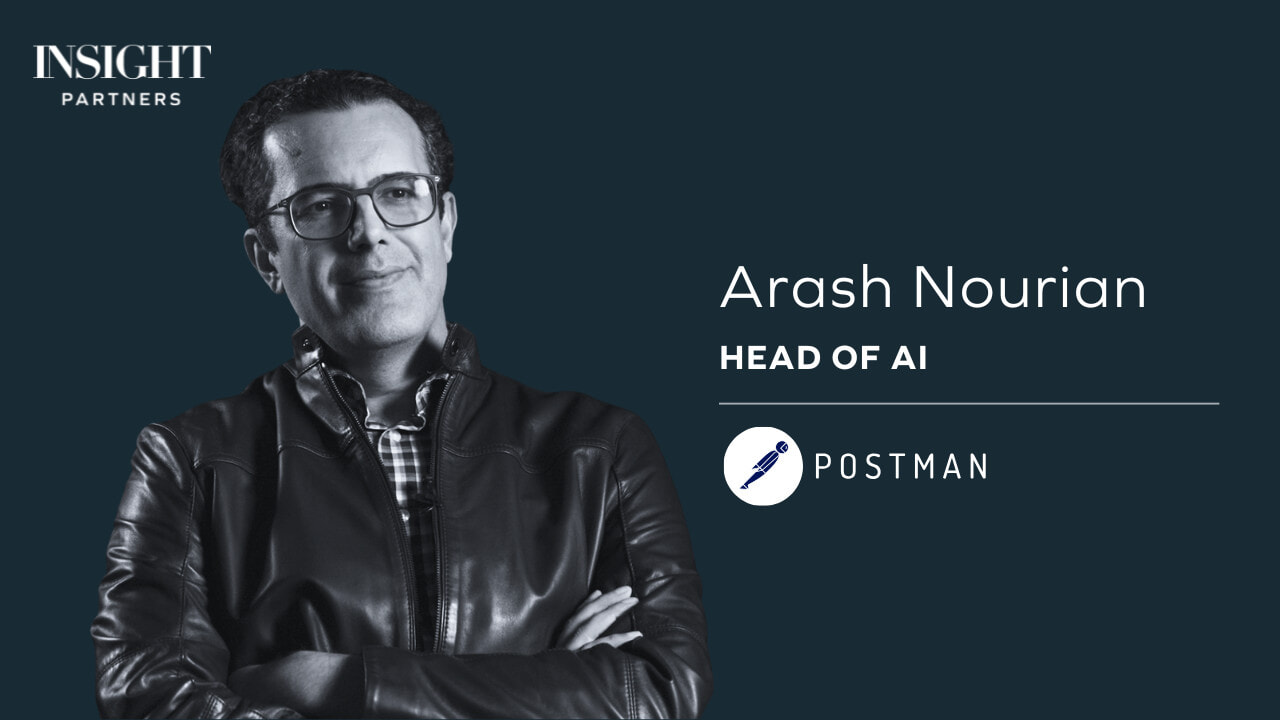
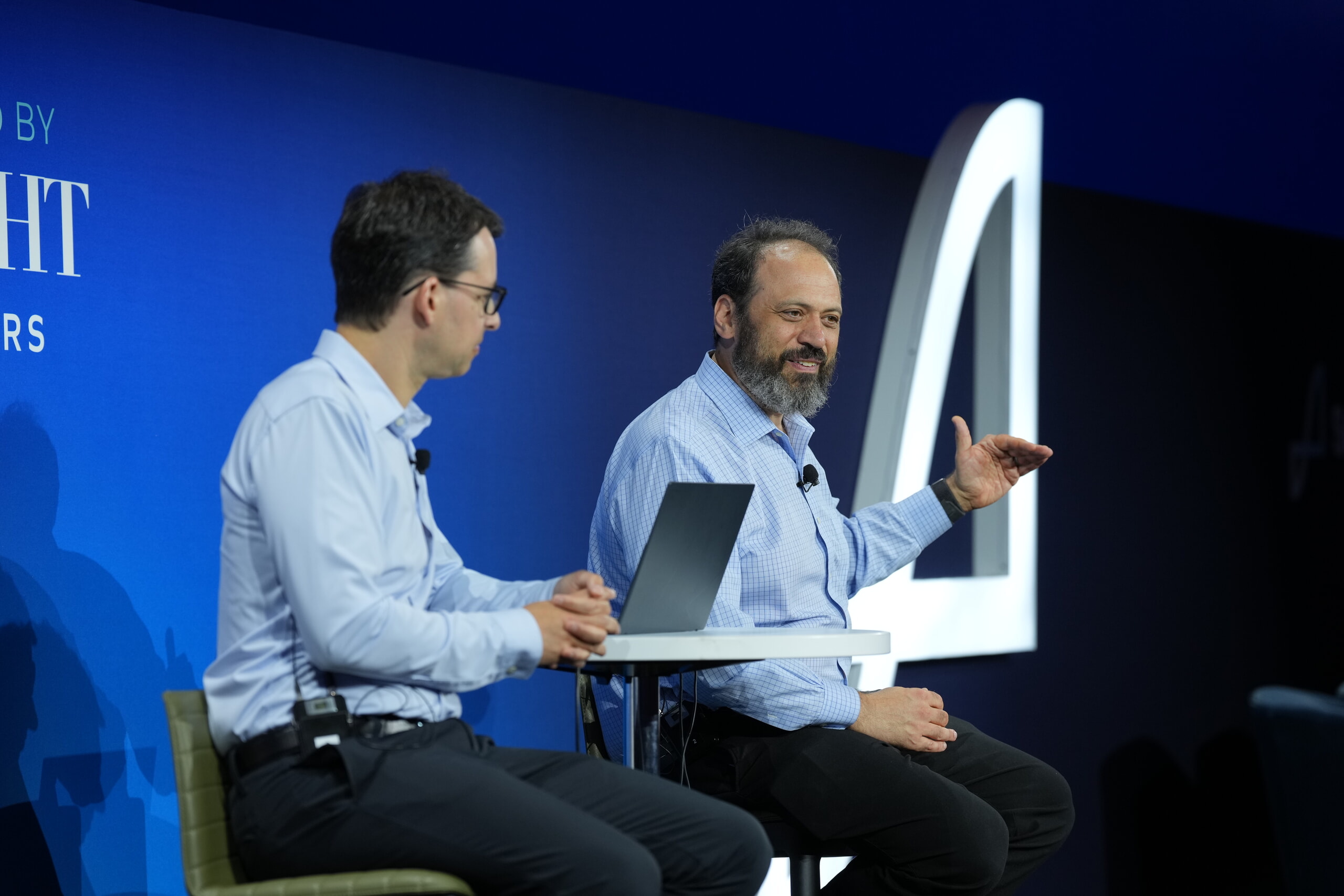
Artificial intelligence is reshaping how software is built, tested, and connected — and few leaders are as close to this transformation as Arash Nourian, head of AI at Postman.
Postman is used by more than 40 million developers worldwide to design, test, and manage APIs — the connective tissue in modern software, and now the foundation for how AI and agentic systems communicate, learn, and collaborate. It puts the company in a position to help create the next generation of AI-ready APIs that power intelligent Agents and autonomous systems.
Read how a childhood spent coding inspired Postman founder Abhinav Asthana to revolutionize the developer experience.
Having previously served as faculty at UC Berkeley, College of Engineering, Computer Science, and School of Information, where he taught machine learning and enterprise innovation, and director at AWS AI, Nourian is leading the company’s push to do exactly that, integrating agentic AI into the API development lifecycle.
“By leveraging AI, we are making these processes much faster, smarter, and more intuitive, which is critical for seamless software connectivity across the world — while boosting developer productivity,” he says.
From his vantage point at the intersection of APIs and AI, Nourian sees how intelligent Agents will fundamentally change not only software engineering but also the way enterprises organize themselves.
1. AI governance is the next competitive edge
Until now, AI has been a co-pilot, assisting human users in generating code, writing text, or automating small tasks. But agentic AI is changing that.
“These are AI Agents that execute tasks autonomously,” Nourian says. “They learn, they reason, [and] they collaborate to solve complex workflows.” And as agentic AI evolves, he argues, so must the frameworks to control it.
“What is not discussed in industry, I think, is the lack of robust governance that needs to be in place, with built-in security. As these AI Agents gain more autonomy within an enterprise, it is imperative to [ensure] they are compliant and executing in a responsible way.”
In this landscape, governance is expected to evolve from a constraint to a competitive differentiator, he predicts. Responsible AI isn’t a compliance checkbox at Postman, but a product principle. That governance begins at the API layer: As APIs become the interface between humans, machines, and autonomous Agents, designing them with governance, security, and transparency in mind is essential.
Each new Agent, for example, should be designed with embedded oversight and data protections to ensure trust as it scales.
For enterprises adopting autonomous systems, Nourian’s message is that governance, done right, can be the infrastructure that supports, rather than slows, innovation.
2. Embrace digital teammates
As AI begins to take on more of the execution, human teams must move up the value chain. Nourian believes this shift is already reshaping how organizations hire and collaborate.
“AI has transformed hiring from purely focusing on execution-based roles to more strategic or architectural oversight roles, with AI Agents that are writing code and able to execute complex workflows. I see organizations looking for talent that excels in problem solving, system design, or even guiding AI.”
This shift also demands a new level of AI literacy. “How people can collaborate … and effectively work with AI Agents as their digital teammates [has] become more important,” Nourian says. “Skills like meta-prompting, prompt engineering, [and] Agent orchestration become more relevant.”
At Postman, autonomous Agents already help developers test APIs, monitor performance, and update documentation automatically. The result is a faster, cleaner development cycle — with machines managing routine work, while humans focus on creativity and system design.
Nourian thinks that human judgment remains vital. The notion that AI could replace the human decision layer, he says, is overstated. “AI-human collaboration is critical in a complex decision-making process.”
For Nourian, the most valuable employees will be those who know how to partner with AI, guiding machines to amplify human potential.
3. Build AI into the product DNA
The true power of AI comes when it’s built into a product’s core infrastructure, argues Nourian. At Postman, AI is embedded directly into the product, transforming routine processes into self-improving workflows so that the organization can continuously learn, adapt, and innovate.
“I see [this] as a transformation to go from what I call manual-coded product features to primarily AI-augmented and data-driven innovation,” he says.
The company’s approach exemplifies what it means to make AI infrastructure-level: invisible, pervasive, and invaluable. Each embedded Agent learns from user behavior to suggest fixes, automate updates, and maintain API quality across large enterprises.
The impact is measurable: faster release cycles, fewer errors, and more time for human creativity. By using AI to help developers create and manage APIs for increasingly sophisticated agentic use cases, Postman allows teams to move faster and push boundaries while reducing bugs, enforcing standards, and freeing developers to focus on higher-value innovation. As Nourian explains, Postman’s AI Agents “detect issues early, suggest fixes, and [ensure] the API stays consistent and high quality across enterprises.”
This model shows how AI, when built into the workflow rather than layered on top, can transform operations without disrupting the people behind them.
The future of intelligent connectivity
For Nourian, the next era of enterprise intelligence won’t be defined by larger models or more automation, but by how seamlessly intelligent systems can work together.
“There is a big opportunity to redefine how software [is] connected across the globe,” he says. “These Agents can seamlessly integrate across industries, picking up workflows, and [executing] them in a governed way, at the same time improving customer experience.”
He points to a future where software no longer just automates tasks, but collaborates through a network of interoperable, adaptive systems that learn and coordinate in real time. That interoperability depends on APIs — the connective framework that allows intelligent Agents and applications to communicate securely. APIs are effectively the language of AI collaboration, and Postman is sitting at the center of how that language evolves.
As Nourian puts it, “It is imperative for people to know how they can leverage AI … in a way that can empower them to do things much faster, in a productive way, but also … to enhance their decision-making process.”
The intelligent enterprises of tomorrow will be built not by replacing humans with machines, but by designing systems where humans and AI evolve and learn in tandem.
*Note: Insight Partners has invested in Postman. This article is part of our ScaleUp:AI 2025 Partner Series, highlighting insights from the companies and leaders shaping the future of AI.