Back
Leadership
How Gameto is reshaping women’s healthcare and making up for lost time
February 11, 2026| 4 min. read
Current fertility treatments take a physical, financial, and professional toll on women. The process of IVF and egg freezing has scarcely changed since the 1970s. It is still so time-intensive, expensive, and invasive that more than 95% of people with infertility can’t access treatment.
Over the past ten years, the women’s health tech industry — sometimes known as femtech — has come to represent a wide range of solutions addressing conditions specific to women (defined for this article as women and all patients, regardless of gender identity, in need of obstetric and gynecologic care) and conditions with a different or disproportionate impact on women.
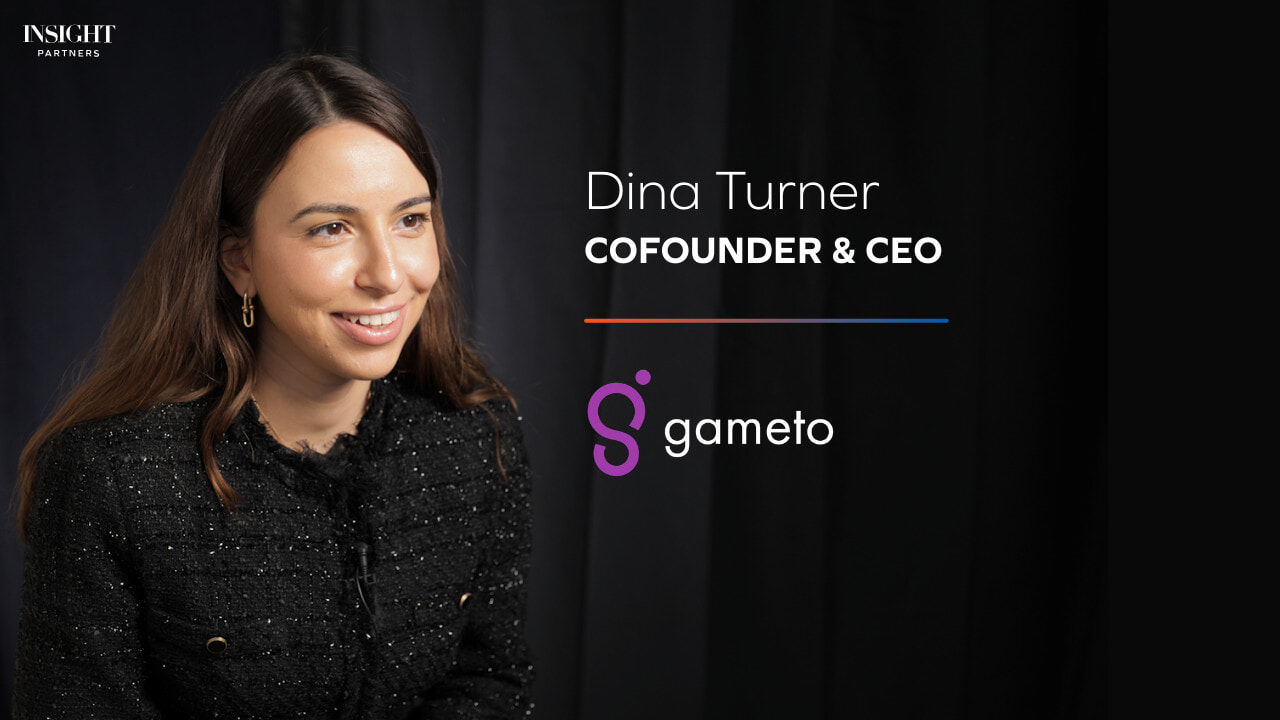
“As a physician scientist-turned-entrepreneur with a pair of ovaries, I myself witnessed that women’s healthcare lacks modern treatments,” says Dina Turner, the cofounder and CEO of Gameto.
Gameto is a biotechnology company that uses cell engineering to develop novel treatments across women’s health, starting with infertility. Like many founders, Turner was inspired by her lived experience.
After training as a doctor at University College London, she spent years researching longevity and aging in both the United States and the United Kingdom before joining New York’s SALT Bio Fund as a partner in 2020. Over time, one pattern became difficult to ignore.
“Women’s health biopharma as a field is very, very small and neglected, and we wanted to see better treatments that we wanted to use, that our friends, our sisters, and mothers wanted to use, and have better healthcare outcomes,” she says.
The new kid in biopharma
In 2020, Turner founded Gameto alongside fertility entrepreneur Martin Varsavsky, announcing $3M in seed funding in March that year.
Gameto scaled quickly from the outset, announcing a $20M Series A in January 2022 to expand its research footprint in the U.S. and Europe and build a lean, multi-disciplinary team spanning biology, engineering, and clinical development.
Insight Partners first invested in the company in September 2022 through its Series A extension, backing the company as it transitioned from a research-based startup into a clinical-stage ScaleUp with global ambitions.
Women’s health presents a huge investment opportunity, says Turner, and Gameto got in early on its evolution as a biopharma category. “We’re kind of the new kid on the block in biopharma.”
To menopause and beyond
At the heart of Gameto’s work is a problem that is widely experienced yet little understood: accelerated ovarian ageing. Ovaries age much faster than the rest of the female body, Turner explains. Typically, women see their fertility begin to decline in their mid-thirties, even as other organs remain in near-peak condition.
Menopause follows around the median age of 51, causing a sharp drop in hormones and leading to broader health issues, including cardiovascular disease, osteoporosis, muscle loss, and cognitive decline.
“Now we’re understanding that [menopause is] associated with good health and life expectancy afterwards,” says Turner.
“By providing treatments across that journey from infertility to menopause and beyond, we hope to improve the health of women at all ages.”
Despite affecting nearly half the population at some point in their lives, ovarian ageing has been overlooked by modern biopharma. There’s a surprisingly basic explanation as to why, she says.
“The way we experience infertility [through] menopause is not really present in other species that we can test in the lab…The mice and rats that we use for testing for many other things, they don’t even menstruate. So for years, not only was this issue neglected for all sorts of reasons, but we also didn’t have good models to understand the basic biology.”
At the same time, even where hypotheses did exist, researchers lacked the technology to test them efficiently. “We didn’t even have the computing power to run all the possible combinations and come up with something tangible that we can actually test,” says Turner.
Engineering the first lab-grown ovaries
Only recently did advances in stem cell engineering, machine learning, and artificial intelligence enable Gameto to innovate, using induced pluripotent stem cells to engineer ovarian support cells.
“We really were the first to take this technology that allows stem cells to be used at scale, without requiring multiple donors, without going into ethical issues, and [make] these human-like ovaries in a dish,” Turner explains.
These lab-grown systems last for long periods, can be manipulated with precision, and tested at scale using computational modeling and AI to simulate millions of potential biological combinations. “If you had to do that manually, it would be pretty much impossible, or take many, many years.”
The result is a platform, rather than a single product, for generating multiple therapies for different stages of a woman’s reproductive life cycle.
From platform to patients
Gameto’s first commercial application of its innovation platform is Fertilo, a cell-based therapy designed to mature eggs outside the body — a process known as in vitro maturation.
Traditional IVF and egg-freezing usually require two weeks of hormone injections, which can come with significant side effects that affect the entire body. “Fertilo cuts down injections from two weeks to two days,” says Turner.
Fertilo has undergone rapid clinical and commercial progress, moving from initial concept in 2023 to Phase 3 clinical trials in 2025, which is “unheard of in traditional biopharma.” The program’s clinical development and Phase 3 trials were financed by two successful rounds of funding, in which Insight participated: a $33M Series B in May 2024 and a $44M Series C in August 2025.
The first baby born using Fertilo turned one in December 2025, and as of early 2026, use of Fertilo has resulted in multiple births globally, achieving regulatory clearance in Australia and countries across Latin America and Asia.
Despite investors’ enthusiasm, it wasn’t a frictionless journey, says Turner. Gameto has had to navigate regulatory challenges and skepticism as a novel product, with some physicians questioning the need for Fertilo despite patients requesting it. “You have an unmet medical need, and then you have patients on the other side who really want this… Patients have been the biggest advocates of this technology.”
Moving at the speed of biotech
Speed has been a defining feature of Gameto’s success. That partly comes down to being a company with the agility to pivot and adapt quickly. “The less bureaucracy, unnecessary hierarchy, unnecessary meetings, and unnecessary delays in that adaptability you have, the better. You’re never going to have the scale and the budget of the large companies as a startup.”
“You have to maintain that muscle to know you can pull all-nighters and fix [problems] in two weeks before your competitors even realize that it’s happening.”
AI has also played a crucial role by dramatically shrinking the burden of regulatory drafts, analyses, and internal workflows. “One amazing person can now manage what a team of 10 used to manage…allowing us to do more with less, and faster, without compromising on quality — which is obviously the most important thing — to safely bring new innovation to patients.”
That innovation comes in the form of Ameno, a menopause program currently in pre-clinical development. The goal is to move beyond symptom management with a cell therapy that restores ovarian hormone production.
In January 2025, Ameno was awarded $10M in funding from the Advanced Research Projects Agency for Health (ARPA-H) as part of the White House Initiative on Women’s Health Research.
“Women’s health is ripe for disruption,” says Turner. “Given women are half the population, and eight out of 10 women report very severe symptoms for which many would take treatments if they were safe and accessible, I think [menopause] has the potential to be that next big thing.”
“I think we’re definitely trending in the right direction, where these topics are no longer taboo. Women are no longer hiding menopause or hiding infertility.”
A long-term vision for women’s health
To date, Gameto has raised approximately $127M. From pre-clinical development to international commercialization and late-stage clinical trials, the company is on an unstoppable trajectory, and they are only just getting started.
“We’re just at the early stage, or what I call the embryonic stage — pun intended — where we are just acknowledging the problems and scratching the surface, but we’re yet to see big investments and prominent companies and blockbuster assets. We certainly believe we have potential blockbuster assets in our portfolio.”
*Note: Insight Partners has invested in Gameto.