Celebrating 30 years of Insight: Nikitas Koutoupes on three decades of growth and change
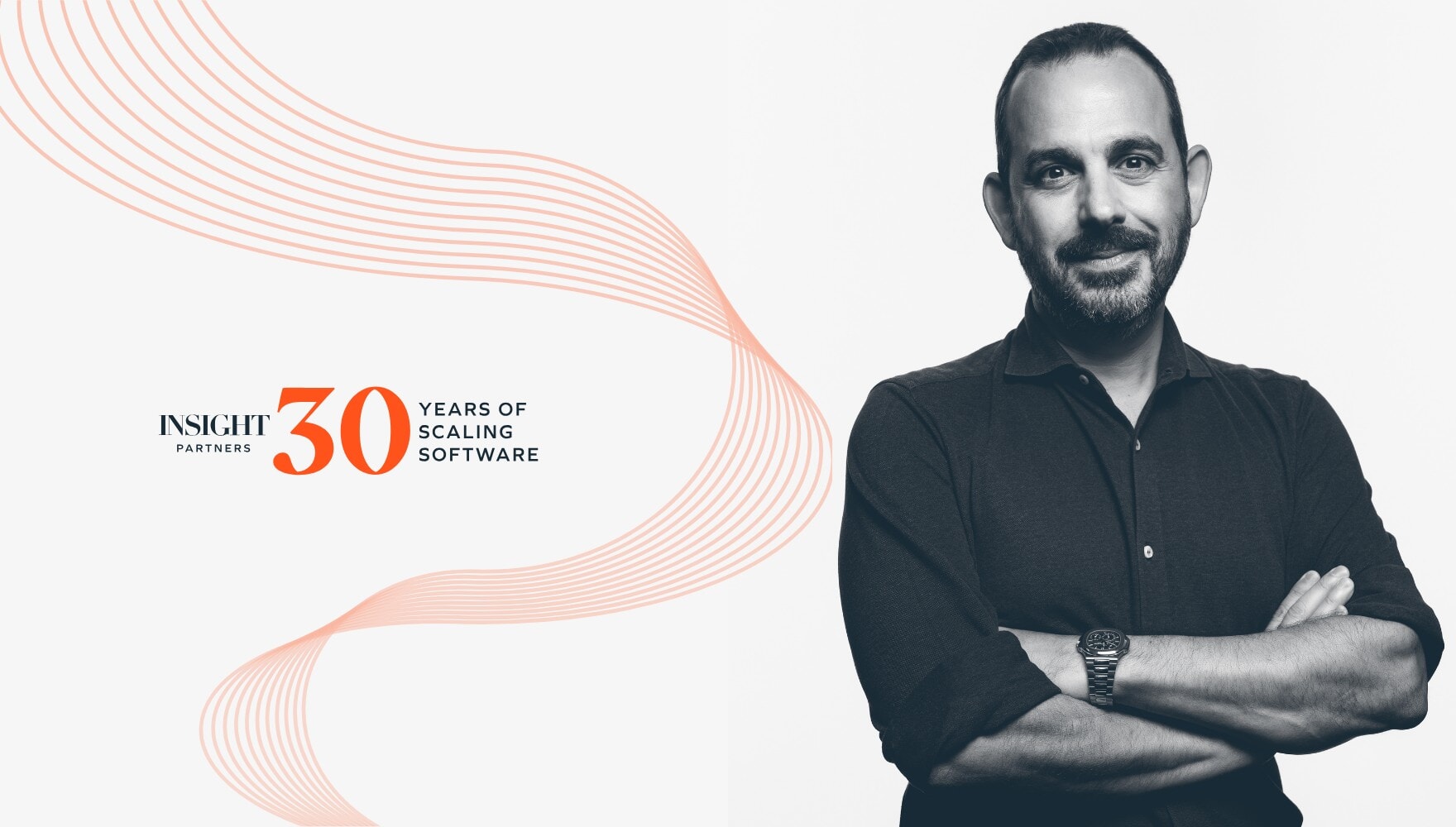
As Insight Partners celebrates its 30th anniversary, we’re spotlighting the people and moments that helped define the firm’s journey. Few team members have witnessed that evolution more closely than Managing Director Nikitas Koutoupes, who joined Insight in 2001. In this Q&A, Koutoupes reflects on the early days of the firm, major market disruptions, the evolution of founders, and what he believes sets Insight apart today.
Q: What brought you to Insight?
Before joining Insight, I started my career at McKinsey & Company, which I felt was as much an education as it was a job. I joined the New York office right out of college, where I worked as a generalist across industries — financial institutions, airlines, and even a project in Greece that required local language fluency. It was an incredible experience for developing structured thinking, communication skills, and an analytical toolkit I still draw on today. I had planned to return to McKinsey after business school — so much so that I enrolled in Harvard’s 18-month MBA program to minimize my time away. However, while at HBS, I co-founded a software startup in the construction technology space.
That startup gave me a front-row seat to the dot-com boom and bust. I stayed with the company through several mergers and rounds of venture funding. Through a mutual connection — an early LP in Insight’s funds — I was introduced to Jeff Horing. Insight was still a relatively new firm at the time, but I was intrigued by its focus on growth-stage software and its disciplined approach. I joined in the spring of 2001, just as the dust was settling from the dot-com collapse. My first task? Helping build what would become the Insight Onsite team alongside Hilary Gosher.
Q: What was the tech world like in 2001 when you joined Insight?
Confused. There was widespread uncertainty about the future of the software and internet sectors. The dot-com bubble had just burst, taking with it massive amounts of investor capital and public confidence. Many companies that had raised huge sums at sky-high valuations were suddenly collapsing or cutting back drastically. Inside companies and investor circles alike, there was a sense of disorientation: How do we operate in this new reality? What actually matters in a software business?
There was no playbook at the time — no well-worn strategy for navigating a systemic downturn in the tech industry. But that lack of precedent made it a uniquely valuable learning environment. We had to figure things out in real time: How to distinguish between “nice-to-have” and “mission-critical” products, how to measure efficiency and sustainability, and how to build a path to long-term value creation. The firms that succeeded weren’t the ones with the best stories; they were the ones that got operational, made smart trade-offs, and adapted quickly.
We realized that the path forward wasn’t found in investor boardrooms; it was in rolling up our sleeves and working alongside management. That lesson, about being hands-on and close to the work, stuck with me and has been foundational to Insight’s approach ever since.
Q: What led to the creation of the Insight Onsite team?
It wasn’t the product of a carefully curated vision — it emerged from necessity. In the aftermath of the dot-com bubble collapse, many of our portfolio companies faced significant operational challenges. Some needed help navigating existential issues, while others were trying to adapt and thrive in a completely new market landscape. What they all needed was practical, hands-on support to supplement board-level guidance.
Jeff Horing and the early Insight leadership recognized that providing this kind of operational help could be a powerful differentiator. So I joined alongside Hillary Gosher to create a new function within the firm. Initially, we relied heavily on our consulting backgrounds, applying growth strategy frameworks and analytical rigor to help companies reposition themselves. But we quickly realized that wasn’t enough. Strategy without execution only gets you so far.
Over time, the Onsite team evolved from a strategic overlay into a fully integrated platform of functional experts — sales, marketing, product, pricing, talent — working directly with our companies. What made the approach unique was that it was never meant to be a one-size-fits-all consulting shop. It was built to be flexible, bespoke, and deeply aligned with the specific needs of our portfolio.
Today, Onsite remains a core part of Insight’s differentiation — and it all started from an urgent need to roll up our sleeves and help where it mattered most.
Q: What makes Insight special?
I’ve grown up at Insight, so it defines my sense of “normal.” But what stands out is how much the firm mirrors the best of our portfolio companies. We’re growth-oriented, we iterate constantly, and we don’t pretend to have all the answers. There’s a strong culture of intellectual humility. Change isn’t just accepted here; it’s part of the recipe. That mindset has given people space to grow across long careers and helped Insight stay resilient through every phase of the market.
Q: You’ve lived through four major disruptions: the dot-com bust, the 2008 financial crisis, COVID, and the software valuation reset of 2022. What did you learn from each?
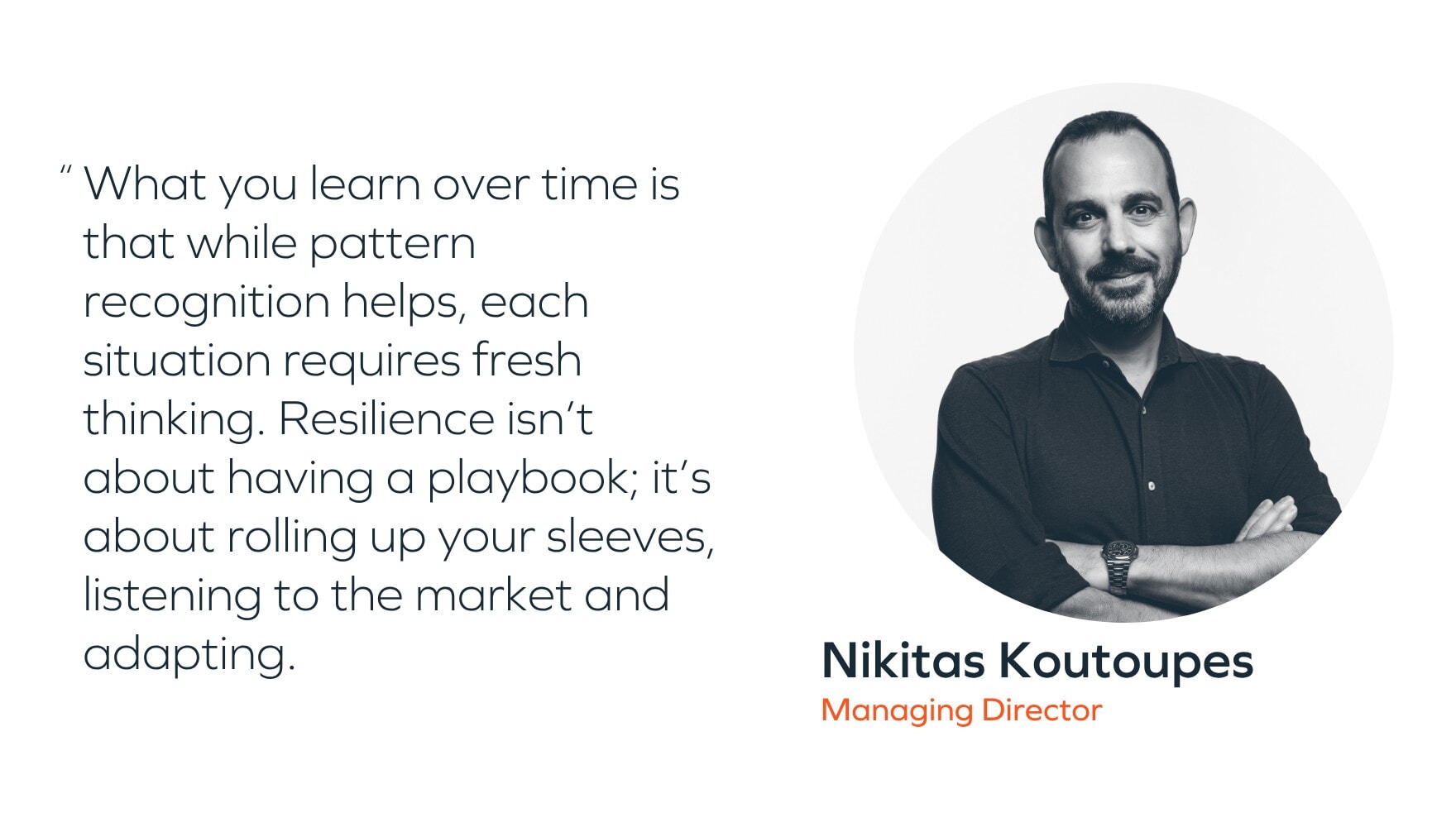
Each disruption was different. The dot-com collapse was chaotic: no muscle memory, no clear answers. The financial crisis tested fundamentals. COVID was an existential fire drill, where we had to triage business continuity and seize new growth opportunities simultaneously. The 2022 valuation correction was more contained but tough for software. What you learn over time is that while pattern recognition helps, each situation requires fresh thinking. Resilience isn’t about having a playbook; it’s about rolling up your sleeves, listening to the market and adapting.
Q: Have you seen founders change over the years?
In the ways that matter most — vision, conviction, ability to inspire others — great founders today are much like they were 25 years ago. But the landscape around them has changed dramatically. There are more business models, lower barriers to entry, faster disruption cycles, and more developed capital and advisory ecosystems. All of that makes it easier to build something meaningful, but also easier to get distracted. The strongest founders today are incredibly focused, and they know how to harness this abundance without losing their edge.
Q: What was the biggest shift in how Insight invests over time?
Our shift toward using unit economics to evaluate businesses was transformative. Instead of relying solely on historical financials, we began asking: What does it cost to acquire a customer, what value do they generate, how long do they stay? These insights allowed us to better predict scale potential, drive shareholder value, and be more helpful to our companies. It was a mindset change that enabled sharper decision-making and more precise operational support. The trick was becoming really good at unit economic analysis as subscriptions became the prevalent means of selling software. It allowed us to accurately predict growth and invest in amazing businesses.
Q: What does Insight’s growth say about the future of venture?
There’s an old debate about whether venture firms should scale. At Insight, we’ve grown significantly, but we’ve done so while maintaining our core, investing heavily in our own resources as the fund size increases. Consequently, we still write $5 to $20M growth equity checks. We still spend time with early-stage companies. And, we organize internally to retain the best of what small firms offer: apprenticeship, collaboration, and speed. Our size has allowed us to invest heavily in Onsite and sourcing, making us more helpful to founders, not less. I think the future of venture belongs to firms that scale selectively and with purpose.
Q: What’s Insight’s DNA, in your words?
We start with a conviction that growth-stage software is the best asset class in the world. From there, we believe it’s our job to identify and get to know every relevant company; not a sample, but the whole universe. We do that through rigorous sourcing and bottom-up analysis. And once we invest, we can double down to help companies scale. We do this with a blend of humility, discipline, and obsession for growth, which has allowed us to stay relevant in a constantly changing market.
Q: Is there a deal you missed that stands out?
Absolutely. Anyone who’s been in this business long enough has an anti-portfolio — a list of companies they passed on or exited too early. I have mine memorized. These moments are hard at the time, but they’re instructive. Sometimes you’re too conservative. Sometimes you lack conviction. But the lessons stick, and they breed humility. And I’m certain that some of my best decisions have been shaped by the mistakes I made from the ones I missed.
Q: Final question — what mistakes do you see repeated most often?
Chasing shiny objects. The hype cycles change — dot-com, crypto, AI — but the temptation remains the same and often leads to loss of focus. Investors and founders alike can get swept up in trends. The ones who stay grounded — who stay analytical, curious, and focused — are the ones most likely to win in the long run.