Insight Partners
More By The Author
Back
ScaleUp:AI
From software to hardware: Where Nest founder Tony Fadell thinks AI will go next
Insight Partners | April 21, 2026| 4 min. read
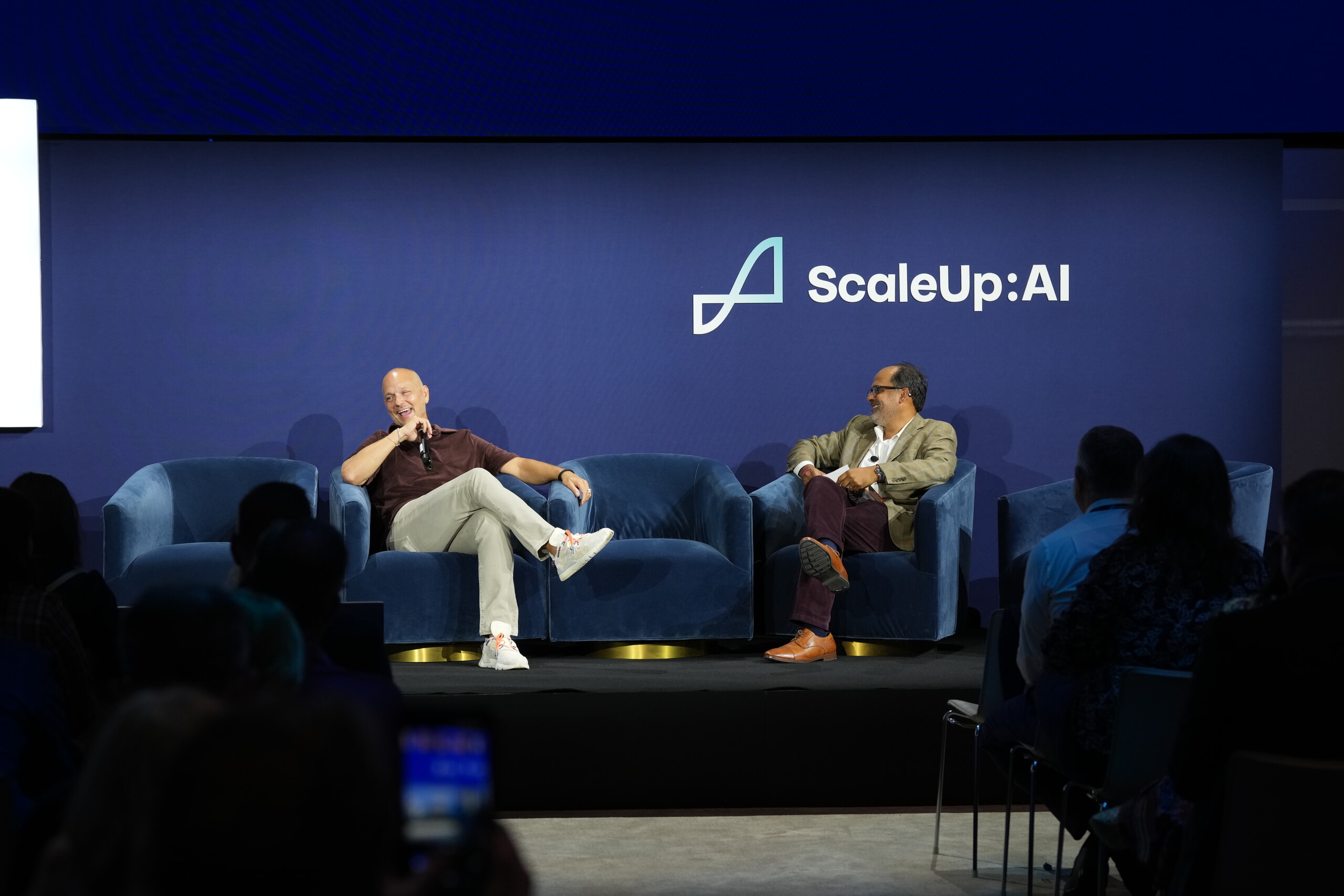
Tony Fadell has helped build some of the most recognized devices in the world — the iPod, the iPhone, the Nest thermostat. These days, he runs Build Collective, a deep tech fund with around 150 companies in its portfolio. At ScaleUp:AI ’25, he sat down with Managing Director Deven Parekh to talk about what AI is actually getting wrong, what the next hardware wave looks like, and why the data center buildout might be more overstated than the market thinks.
Key speakers
- Deven Parekh: Managing Director, Insight Partners
- Tony Fadell: Founder, Build Collective; Co-Creator of the iPod, iPhone, and Nest
Key takeaways
- Most AI failures aren’t tracked — and that gap matters when you’re putting your brand on the line.
- The companies seeing real ROI are starting inside the business, not customer-facing.
- AI is still a chatbox. The next hardware wave is about context: sensor-rich devices that give AI what it needs to actually be useful.
- A lot of what lives in the cloud today will migrate to the edge. The data center buildout may be more overstated than the market thinks.
- The risks — from AI therapy loops to open-source bioweapons — aren’t hypothetical.
These insights came from our ScaleUp:AI event in October 2025, an industry-leading global conference that features topics across technologies and industries. Watch the full session below:
The know-it-all problem
There’s a type of person Tony Fadell would never hire: the know-it-all. Sounds right, says all the right things, and then you look behind the scenes, and something doesn’t add up. He argues that a lot of AI works the same way.
“When you’re going to put your brand on the line, when you’re taking a person and either augmenting or replacing them, you better know what’s going to work.”
“We have a lot of great examples of AI where it works, and it works brilliantly,” he said, “but we don’t have all the stats of where it doesn’t work.” The failure modes aren’t documented. The error tracking isn’t there. For consumer apps — where the worst outcome is a bad photo filter — fine. For a financial assistant, a medical scribe, a legal tool? “When you’re going to put your brand on the line, when you’re taking a person and either augmenting or replacing them, you better know what’s going to work.”
This shapes where Fadell invests. The companies he backs are built on narrow, well-understood training data with rigorous accuracy tooling. Some have FDA-approved medical imaging products. Others handle clinical documentation. None of them are off-the-shelf LLMs pointed at a new vertical and called a product.
Start in the back of house
Across his roughly 150-company portfolio, Fadell sees a consistent mistake: Founders rushing AI in front of customers before it’s earned the right to be there.
“If any of you have been on AI-driven customer support, they’re absolutely horrible. They say they work. They might work. But they really don’t when you’re on the other side, and you’re having a problem.” The brand cost of a bad AI interaction is real and underestimated.
His guidance to founders is consistent: Start in the back of house. Automate operations. Handle the interior before you touch the exterior. If human replacement is on the table, it has to pass through human review before it reaches a customer. The companies getting the best ROI — he named medical scribing and insurance coding as standouts — are the ones where the AI never talks directly to the end user.
“I’m trying to do much more on the operations and interior side than on the exterior side.”
Hardware’s next act
Fadell helped build the iPod. He co-created the iPhone. At Nest, he built what was arguably the first consumer product with real AI in it — they just couldn’t call it that in 2011. “People would be scared. You have artificial intelligence changing my temperature?”
His read on where we are now: We’ve gone from cloud to edge, and we’re all still typing into chat boxes.
That will change. He’s already watching younger people interact with ChatGPT by voice at a rate that dwarfs anything Siri ever saw. The modality shift is coming — text first, then voice, then ambient. But what makes that shift meaningful isn’t the microphone. It’s context.
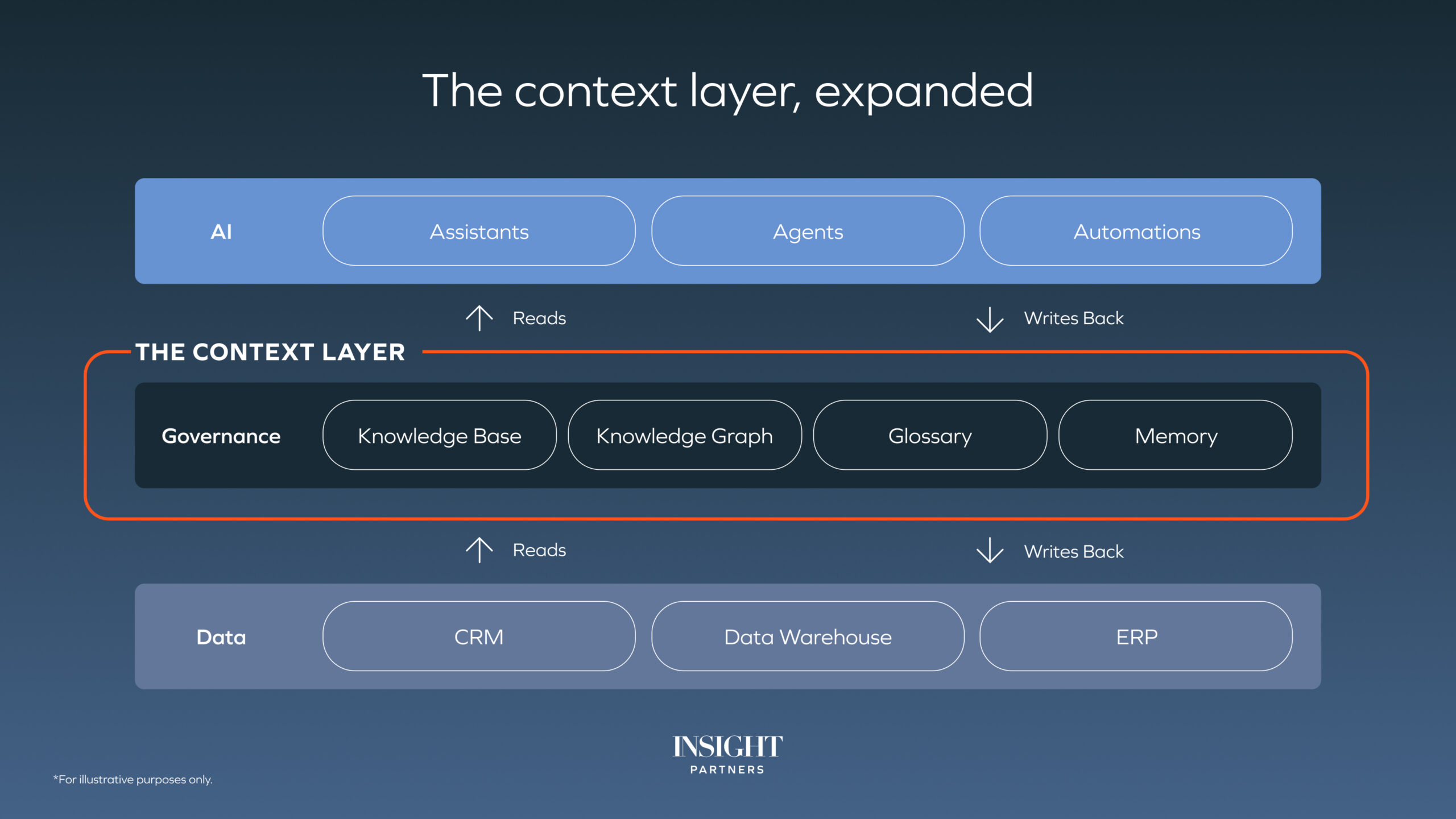
“AI hallucinates less if it has the best context.” The problem is that most AI tools today are context-poor; they don’t know who you are, where you are, what time it is, or what room you’re in. Apple and Android restrictions limit which apps can access device sensors.
So a new category of hardware is emerging: sensor boxes that collect location, temperature, audio, and camera data and feed it directly into AI systems. This is what the Jony Ive-OpenAI project is really about, per Fadell’s read. Not a new screen, but a richer context layer. And it doesn’t replace the smartphone. It works alongside it, because visual information still needs a visual surface.
Too much compute, not enough revenue
Fadell is skeptical of the current infrastructure buildout — not of AI’s potential, but of the capital assumptions underneath it.
He pointed to the DeepSeek moment earlier in 2025 when the market briefly realized that smaller, more efficient models could do much of what frontier models do at a fraction of the cost. Then everyone moved on. OpenAI then released a voice model that is 70% smaller than its predecessor and runs on-device. The trend is clear, even if the investment thesis hasn’t caught up.
“People are not going to be paying $200 or $1,000 a month for AI Agents. They’re going to have to run closer and closer to you.”
“The GDP of Singapore is the same size as the investments in data centers this year,” he said. “And the revenue? About $30 billion.” His view: A lot of what currently requires data center compute will migrate to the edge — to phones, homes, businesses — as models get smaller and the economics of local inference become harder to ignore. Supercomputers didn’t disappear after the 80s. They’re still used for nuclear simulations and chemistry experiments. But nobody’s running their daily workflow on one. “People are not going to be paying $200 or $1,000 a month for AI Agents. They’re going to have to run closer and closer to you.”
What keeps Tony Fadell up at night
Fadell is an optimist, but he’s clear-eyed about two things.
The first is the therapy loop problem. AI systems built to be agreeable tend to reflect what users want to hear. He’s already seen what that looks like in practice — “therapy” that validates rather than redirects. His response was to back a company that fine-tuned a relationship-coaching product using real therapeutic data, where an AI therapist role-plays difficult conversations with users rather than agreeing with them. But the general-purpose alternatives are already in the wild.
The second is bad actors. “We have these small open-source models that can sit on a phone. Any non-state actor can get access to that — and there’s not going to be a regulatory way of stopping it.” He’s watching quantum computing as the next domain to get ahead of — expensive enough to track, powerful enough to matter, and still early enough that governance might be possible. He also expects full bifurcation from chips to applications. “There are already two TikToks. The world is separating.”