Insight Partners
More By The Author
Back
Leadership
CEO Jan Inge Pedersen on building Kabal into an industry-defining logistics platform
Insight Partners | July 21, 2026| 7 min. read
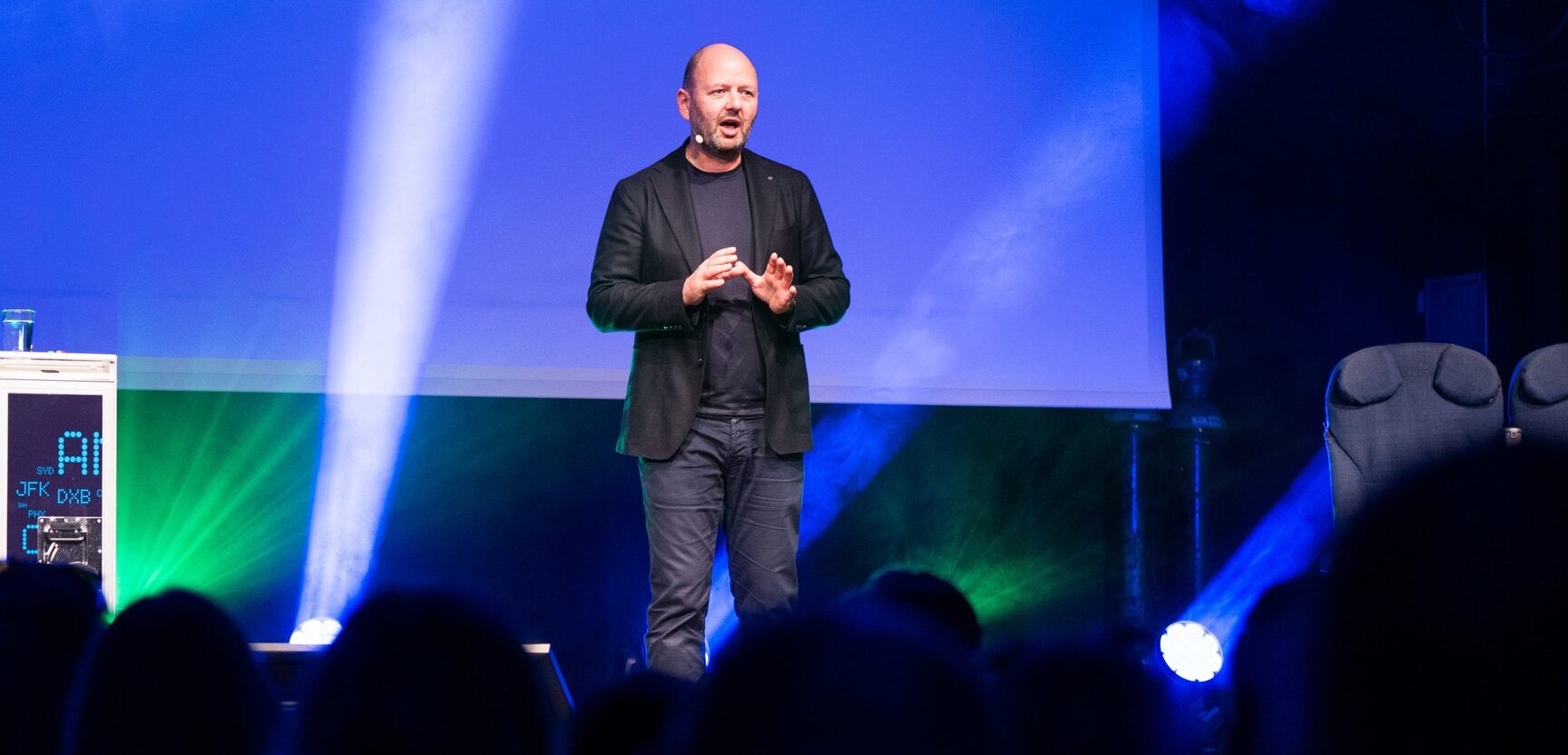
At age 17, Jan Inge Pedersen would ride his scooter to nearby Sandnes, about 15 minutes south of his home in Stavanger, Norway, to get his hands dirty. “My first job was cleaning oil and gas equipment,” reveals the Kabal founder, who has built the go-to infrastructure for oil and gas companies. “Every morning, I’d drive there, put all the gear on, and clean.”
Pedersen would rise to become a senior mechanic for NASDAQ-listed energy services giant Weatherford International, later moving into logistics, coordinating offshore assets for BP, LUKOIL, and Equinor.
Few people understand the inner workings of offshore drilling like Pedersen, which is how he came to found one of the industry’s most disruptive technology platforms. As a coordinator, he tracked vessels, helicopters, personnel movements, equipment deliveries, and issues throughout the supply chain.
“Kabal comes from working in offshore logistics, from seeing that the extensive use of email, Excel spreadsheets, and phone had become an almost impossible game,” he says.
It was only when Pedersen met his cofounder, Fredrik Larsen, a gifted software developer, now chief innovation officer of Kabal, that Pedersen realized his dream to automate these manual touchpoints. “Fredrik has this ability to solve the problem in an easy way,” Pedersen explains. “He sees solutions where others see obstacles and is great at translating real-world challenges into software.”
Pedersen met Larsen when the pair were working at BP; his domain understanding impressed Pedersen. “Many software companies have a customer asking them to make something, but they don’t always have the domain knowledge themselves,” says Pedersen.
“You need to understand what you are solving. We have never asked the customer, ‘Should it be like this or like that?’ We made the software, took their hand, and led them in the right direction.”
The pair launched Kabal in 2011. From the outset, Pedersen set himself a lofty goal for Kabal: “To win all operators in the world.”
Going global
While rivals struggled to reach product-market fit, thanks to understanding the issues at stake, Kabal nailed it early. “We have seven core features in our system,” Pedersen says. “It’s the same seven features we started with. We’ve added a lot of great features around them over the years, and today, many of these are key functions for our customers. But the core has stayed the same.”
He likens his platform to photo-sharing app Snapchat. “You just want to take a picture and send it to somebody you know. Do you really need all the other stuff? No, you don’t. Keeping things simple for the user is essential in all software.” To encourage the oil and gas companies to take a risk on his nascent technology, Pedersen had to be bullish.
“My way of selling was to say, ‘If you don’t do this, you’re working in the Stone Age.’”
It took verve to win business from energy behemoths like BP and ExxonMobil. “I never talked about how small we were,” he reveals. “If I was asked how many employees Kabal had, I would try not to answer or say, ‘More than enough.’”
Kabal won BP as a customer in 2015 when the company had just 15 employees. Winning a customer like BP was a significant breakthrough and created momentum in the market, opening doors to other operators. As Kabal continued to grow, the company scaled carefully, balancing expansion with the strong financial discipline that remains a defining characteristic of the business today.
“We maintained extremely healthy financials. That was a super-power we maintained and continue to have.”
Many companies are pulled in multiple directions by customers asking for new features or widgets, but Pedersen has shown an unflinching ability to stand fast.“If they want to change anything in our software that we believe will degrade it, we say no,” he says. “Then you need to come back when you are ready to work the way we work. If you, however, come up with suggestions that will improve Kabal, we are all for it. This, I believe, is how we continue to define our industry. Not alone, but in collaboration with our customers.”
Pedersen targeted the oil and gas hubs of the United Kingdom, Norway, and the United States. Cracking the American market took persistence, he admits. “We traveled to the U.S., understanding that some of the biggest oil and gas companies are sitting there. It took us five years to sign the first contract.”
A partner to win the market
The software did what was promised, driving efficiencies, cost savings, and streamlining operations. BP was quick to roll out Kabal’s technology internationally, across their drilling operations. “All of a sudden, we are in a bid for a BP contract for 10 countries, which we won, so that made the ball roll.”
Up until this point, Kabal had not been built on outside capital. The founders bootstrapped the business from the start, giving them the financial independence to grow on their own terms. “We never needed money to invest in Kabal,” Pedersen says. “We have always had around 50% margin on the business we do. We still have 50% margin.”
Rather than needing cash for survival, the decision to bring in investors was about boosting the company’s global ambitions. In 2019, Pedersen and Larsen sold a majority stake to Norwegian private equity firm Norvestor to accelerate international expansion and take some risk off the founders’ table.
By 2023, 7,500 companies, including most energy supermajors, were using the software, alongside 58,000 individual users. Because of its margins, Kabal attracted significant investor interest — too much, according to Pedersen. “I was really stressed because I was going on so many dates,” he says. “I was getting sick of all the dinners and coffees. ”
Pedersen knew the right partner would need to be more than a financial backer. “We were looking for a pure tech buyer that had an aggressive mentality to winning the market,” he says. After meeting around 20 venture and private equity firms over a five-month period, one stood out.
Scale up your career: See all open roles at Kabal.
The investor POV
“In Jan Inge, you have a CEO with enormous passion. That energy is evident across the entire management team and translates directly into product quality and customer loyalty.”
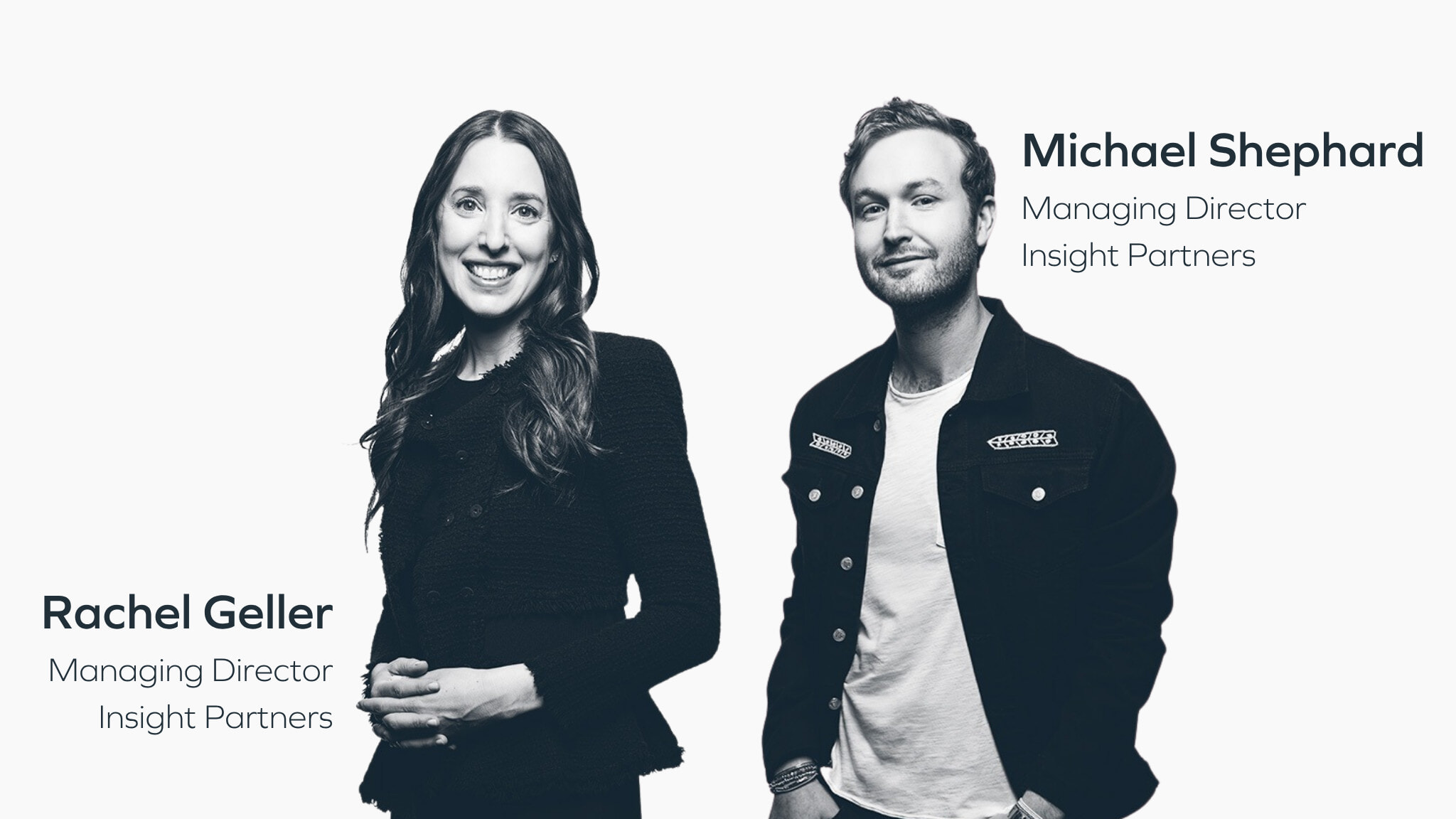
“We first came across Kabal while doing our own market research on energy logistics,” says Managing Director Rachel Geller. “One of our analysts had spoken to Kabal a few years earlier, when it was a bit smaller. Even back then, it was clear to us that Kabal could be a leader, though the timing for a partnership wasn’t yet right.”
“When you combine rising global demand for energy with the immense pressure to reduce emissions, you get a special opportunity for software,” Geller explains. “Kabal sits in the middle of those needs, driving cost savings and connecting operators and suppliers on a single platform. In fact, this network effect got us especially excited: When an operator adopts Kabal, their supply chain is brought on board.”
Geller reveals that Pedersen avoided Insight’s calls for a long time before agreeing to meet in Stavanger. “He wanted to make sure we were serious,” she explains. Managing Director Michael Shephard flew to Kabal HQ in early 2023. Initially, Pedersen wasn’t convinced.
But Shephard and Geller kept getting on a plane. “They never gave up,” says Pedersen. “They just came back and back and back.”
The Insight team quickly grasped the scale of the opportunity. Energy logistics is a huge industry, valued at an estimated $477.2B in 2025. “What’s also notable is that it’s still in the early stages of digital transformation,” Geller says. “The industry still relies heavily on manual processes, with a lot of communication being very analog and fragmented.”
“You could feel the energy in person; the relentless focus, the deep domain expertise, and drive to win,” Shephard adds.
Over time, Pedersen began to see that Shephard and Geller were passionate about the company and his leadership. “I realized, okay, there’s this connection,” he says. “In the way that Rachel is speaking, and the way Michael is speaking…I can trust these people.”
“We had done a lot of work in the space before we ever came to meet the company. And then beyond that was a personal connection with Jan Inge and excitement about his level of ambition for the company and the relationship,” says Geller.
Geller and Pedersen are both competitive individuals, driven by the desire to be the best. “I just want to win,” says Pedersen. “My thing is Kabal. I spend all my time on Kabal. It’s in my head almost constantly.”
“We connected on this personally and talked about it at length,” adds Geller. “It is a core Insight value in terms of ‘hunger to win’ as well.”
Insight announced a majority acquisition in May 2023, and Geller joined the board, joined by Shephard and Raja Atluri. Pedersen reinvested in the company alongside Insight, which demonstrated his confidence and conviction in the company. Having a supportive investor has been transformative for Pedersen. “It builds this extra confidence,” he explains. “You have somebody with you.”
New acquisitions, new opportunities
Another advantage of the partnership with Insight Partners is that Pedersen is empowered to act when approached by an acquisition target. “If somebody should come with something that is fantastic…I will buy it,” he says. With Insight’s support, Kabal has taken a proactive approach to M&A, actively identifying and pursuing companies that can help accelerate its growth.
For example, Insight has helped to set up the crucial first meetings and advise on the pricing landscape. “That trust has just been built stronger over the years that we’ve been together,” says Pedersen. Kabal acquired Trackit Energy in 2024 and IronSight* in 2025, expanding beyond offshore drilling and cargo logistics into onshore operations and personnel logistics.
“We are committed to broadening our platform with complementary solutions as impactful as the core Kabal system,” Shephard says. “When opportunities to acquire products like that emerge, we don’t hesitate to jump on a plane alongside the Kabal team and chase them down.”
“Now we see the total logistics as one thing,” Pedersen explains. “Offshore and onshore are the same customer space, with similar challenges.”
“These are two vital pieces of the puzzle for a complete energy logistics solution,” says Geller. “It is great to see the fruits of that strategy as we scale our personnel and onshore products across the globe.”
“Every time we go to the track to run, we have to be number one”
Today, Kabal serves customers across the world’s leading energy hubs in 30 countries. “I’m always careful about saying that nobody can take our position,” Pedersen says, adding that he doesn’t waste energy thinking about the competition. “If you’re not good enough and somebody is better than you, you will lose,” he says.
“We have one job to do: to be the best at what we do. Every time we go to the track to run, we have to be number one.”
This passion is infectious, he says, and all his staff have caught the bug. “They can feel it, they hear it, they see it. People who work here, they notice that and it influences them into doing as good as they can.”
In pursuit of greatness, Kabal is increasingly powering its solutions with AI. “Together with our customers, we have access to a unique and growing dataset built from real-world operations,” says Pedersen. “That data is what makes AI valuable. By applying AI to it, we can deliver smarter insights, automate complex tasks, and help customers predict and prepare for what comes next.”
Instead of a human deciding whether a vessel should sail or which route to take, AI can identify the most efficient route and adapt in real-time as conditions change. The quality of the underlying data is critical.
“If the foundation of the data put into that AI model is not right, it’s worthless.”
This is why Pedersen and Kabal approach AI with some caution. “If we send a vessel that costs $10M a year to the wrong rig or without the right equipment, because the computer didn’t get it right, we have a problem.”
“It’s a platform that grows with the market”
Since Insight invested, Kabal has continued to evolve at pace. “Kabal isn’t just a static tool. It’s a platform that grows with the market,” explains Geller. “By combining deep industry knowledge with meaningful support, it can ensure that customers stay ahead of where the industry is going.”
The energy market has seen a lot of macroeconomic headwinds in recent years, yet Kabal has thrived throughout. “It isn’t that many years ago that COVID was here, oil and gas were dead, and everyone was going green,” says Pedersen. “And now we understand where we are needed”
The Insight team and Pedersen are united in their shared vision for the future of the company. “For Kabal, the best is yet to come,” says Geller. “The culture and leadership truly stand out. When you look at the next waves of digital transformation, the pressure to reduce emissions, and the global demand for energy, we expect those needs to continue to grow. Kabal is well‑positioned to serve them.”
“The industry’s been through so many ups and downs, but we find a way to adapt and move forward. As long as there is a rig operating somewhere, and it needs people, equipment, and support, Kabal will be there.”
*Note: Insight Partners has invested in Ironsight and Kabal.