Insight Partners
More By The Author
Back
Leadership
According to Root.io, your security backlog is a problem that only AI can fix
Insight Partners | July 07, 2026| 3 min. read
As of June 30, 2026, Root.io has been acquired by Aikido.
Enterprise security used to treat vulnerability management as a staffing issue. A spike in security alerts simply meant hiring more engineers, opening more tickets, and prioritizing when the backlog got too long.
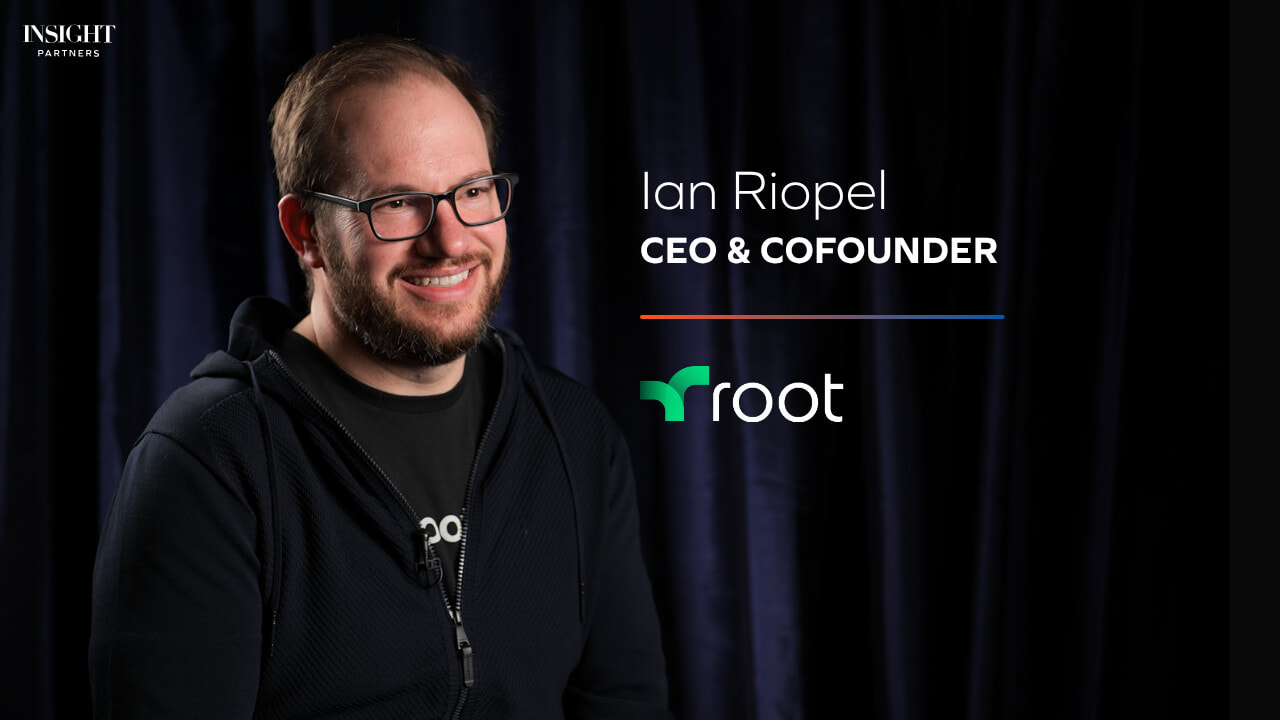
That model doesn’t work in a world where the speed at which vulnerabilities emerge outpaces that at which humans can fix them. “Organizations are now realizing that it is impossible to tackle the supply chain risk as it’s evolving today,” says Ian Riopel, CEO and cofounder of Root.io.
Formerly known as Slim.ai, Root is an agentic, open-source security company that automates vulnerability remediation across the software supply chain. Riopel spent years in cybersecurity roles at Cisco, CloudLock, and Rapid7 before founding Root, and he believes the only viable response to AI-powered attacks is to meet them with AI-powered defense.
Here, he shares why the open-source security industry is at an inflection point, and what organizations need to do differently to keep pace.
“Latest” doesn’t mean safest anymore
The standard industry advice on open-source security used to be to always update to the latest software version. Newer releases meant fewer known vulnerabilities and therefore a smaller attack surface. It was simple, defensible guidance that most organizations followed.
“What we’re finding now is that’s become a new attack surface,” says Riopel. When attackers figured out that the update pipeline itself was a target, they began hiding malware inside the open-source software companies use to build their products, so that malicious code gets pulled in automatically without detection.
“Now going to the latest, really can mean going to the latest zero-day.”
The Shai-Hulud supply chain attacks are a recent example of malware embedded in widely used packages, which were distributed to any organization that followed best practices and updated its software to the latest version.
Read on: How Root secures software at the speed of development
The solution, argues Riopel, is surgical backporting. Instead of upgrading to a new version wholesale, you patch only the specific lines of code responsible for the vulnerability, leaving the rest of the application unchanged. That means organizations can stay on trusted versions of their existing software and avoid accumulating new risks.
AI is making the vulnerability problem harder on both sides
The rise of AI coding tools has significantly worsened the problem of open-source security. Developers using AI assistants to generate code are constantly pulling in open-source dependencies, says Riopel.
“With the era of vibe coding, more and more people aren’t even aware of what open source they’re pulling in as they’re building.” The result is a rapidly expanding attack surface that no human security team can keep up with.
At the same time, defenders are being flooded with AI-generated alerts that drown out genuine threats that need attention, says Riopel. “Open-source maintainers are getting tired of having to play whack-a-mole with what seems to be, most of the time, fake or not real, CVEs [common vulnerabilities and exposures]…That is distracting.”
The same speed advantage applies to attackers, he adds. “An actor with enough time and money can build a factory that can create and produce sophisticated…zero-days” in the same short timeframe that agentic systems can patch them.
The window between a vulnerability being discovered and being actively exploited is shrinking rapidly, and organizations that rely on human-operated triage cycles are already losing the race.
“There is no room for hallucination”
A year ago, the idea of automatically fixing vulnerabilities at scale was met with skepticism, says Riopel. “Most conversations would start out with: ‘There’s just no way it’s even possible.’”
That’s all changed. Root’s agentic systems now resolve more than 95% of vulnerabilities automatically, using swarms of specialist Agents, each focused on a specific dimension of the problem. One dedicated swarm does “nothing but testing,” validating stability, confirming a fix has worked, and ensuring no new vulnerabilities have been introduced, explains Riopel.
“This is a highly choreographed, highly specialized component of the bigger swarm. And then, of course, at the end, it’s all validated by a human in the loop.”
“The amount of ‘human in the loop’ is slowly reducing.”
This is a deliberate design principle that reduces human analysts’ workload to free them up to focus on that remaining 5% of alerts. “Anytime we’re ready to ship something to production…that’s going to impact a Fortune 500 software supply chain or a government entity, we want to make sure that human has a quick look,” says Riopel.
The consequences of a broken patch in a regulated environment carry legal and financial weight that simply demands human accountability. “There is no room for hallucination when you’re talking about production-grade deployments.”
Stop asking developers to do security work
Anyone working in the security industry for the past decade will be familiar with the “shift left” philosophy: Move security responsibility earlier in the development cycle, closer to the engineers writing the code.
“This just translates to more…tickets and more time and focus going away from…feature development,” says Riopel. “Am I going to spend 20% of this next sprint cycle trying to fix this last vulnerability that may or may not be true, or do I spend that time getting the feature out?”
Most companies prioritize shipping new features, so vulnerabilities pile up unaddressed until an audit forces them to confront the backlog. The cycle repeats.
“Engineers don’t really want to deal with security. They want to develop and work on cool new features in tech and push it out to production and have users use it.”
The better model, Riopel argues, is what he calls ‘shift out’ — removing the security burden from developers entirely. In practice, that means security operating as a silent layer where vulnerabilities are fixed in the background. Developers can work exactly as they always have, and security outcomes are delivered without anyone having to context-switch into remediation mode.
“We want to…make it a passive experience where they’re still operating the same way they would, but they’re still achieving the same security outcomes that their … AppSec [application security] and their CISOs and their auditors and their customers are demanding.”
Clearing the backlog, forever
The security industry has spent decades helping organizations track and manage their backlogs of known vulnerabilities, rather than actually eliminating them. Riopel’s bet is that AI makes elimination possible for the first time. He envisions a software supply chain where vulnerabilities are fixed faster than attackers can exploit them, and where zero CVEs is the norm.
“We’re on a mission to secure all of open source,” he says. And in the era of AI-generated attacks, that mission has never been more urgent, or more achievable.
*Editor’s note: Insight Partners has invested in Root.io.